
Hotdisplay Technology Co., Ltd
IPS displays are useful when users view the screen from different directions or when the product is mounted at an angle. Confirm the model's specified viewing angles.
IPS technology can help maintain a more consistent visual appearance across viewing positions. Color performance, contrast and brightness remain model-specific parameters.
IPS TFT products are available in different dimensions and resolutions, allowing engineers to select a display for a handheld device, control interface or embedded product.
Some HOTDISPLAY products list high-brightness or extended-temperature specifications. These characteristics are not standard across every IPS screen; choose a model that explicitly meets the application's requirements.
| Selection factor | What to verify |
|---|---|
| Size and resolution | Match the visual layout and enclosure |
| Viewing angle | Confirm specified left, right, top and bottom values |
| Brightness | Select for the real ambient-light conditions |
| Interface | Verify host-board support and signal requirements |
| Temperature | Confirm operating and storage limits |
| Mechanical design | Check dimensions, active area, FPC and mounting |
| Touch option | Confirm whether touch is included or optional |
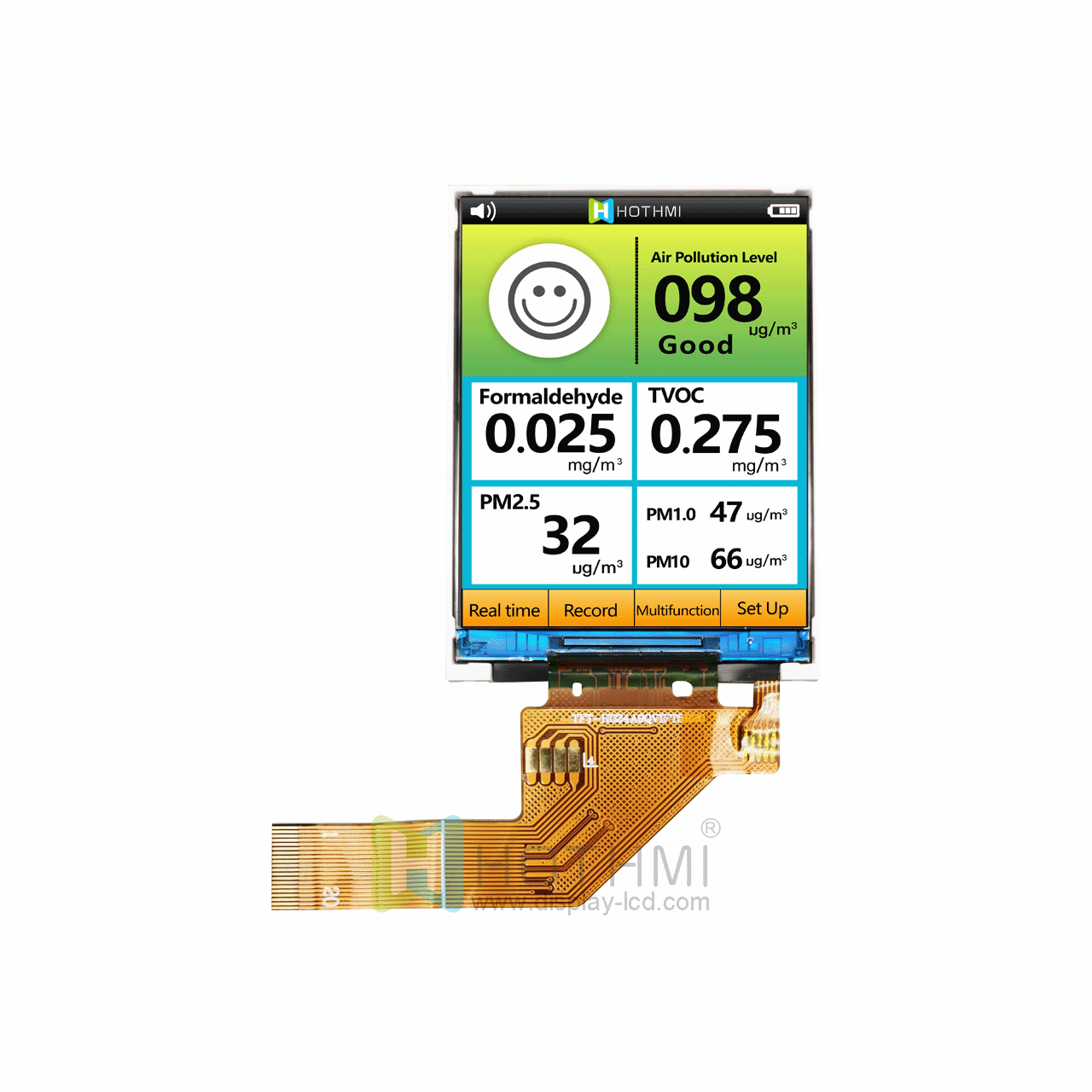
Depending on the model, available product configurations may include RGB or MIPI DSI interfaces, different driver ICs, touch or non-touch versions, selected high-brightness options and different operating-temperature ranges.
Customization may include selected FPC adjustments, touch-panel integration, cover-glass shape and thickness, and surface treatments such as AG, AR or AF. The exact combination must be reviewed against the target model and project requirements.
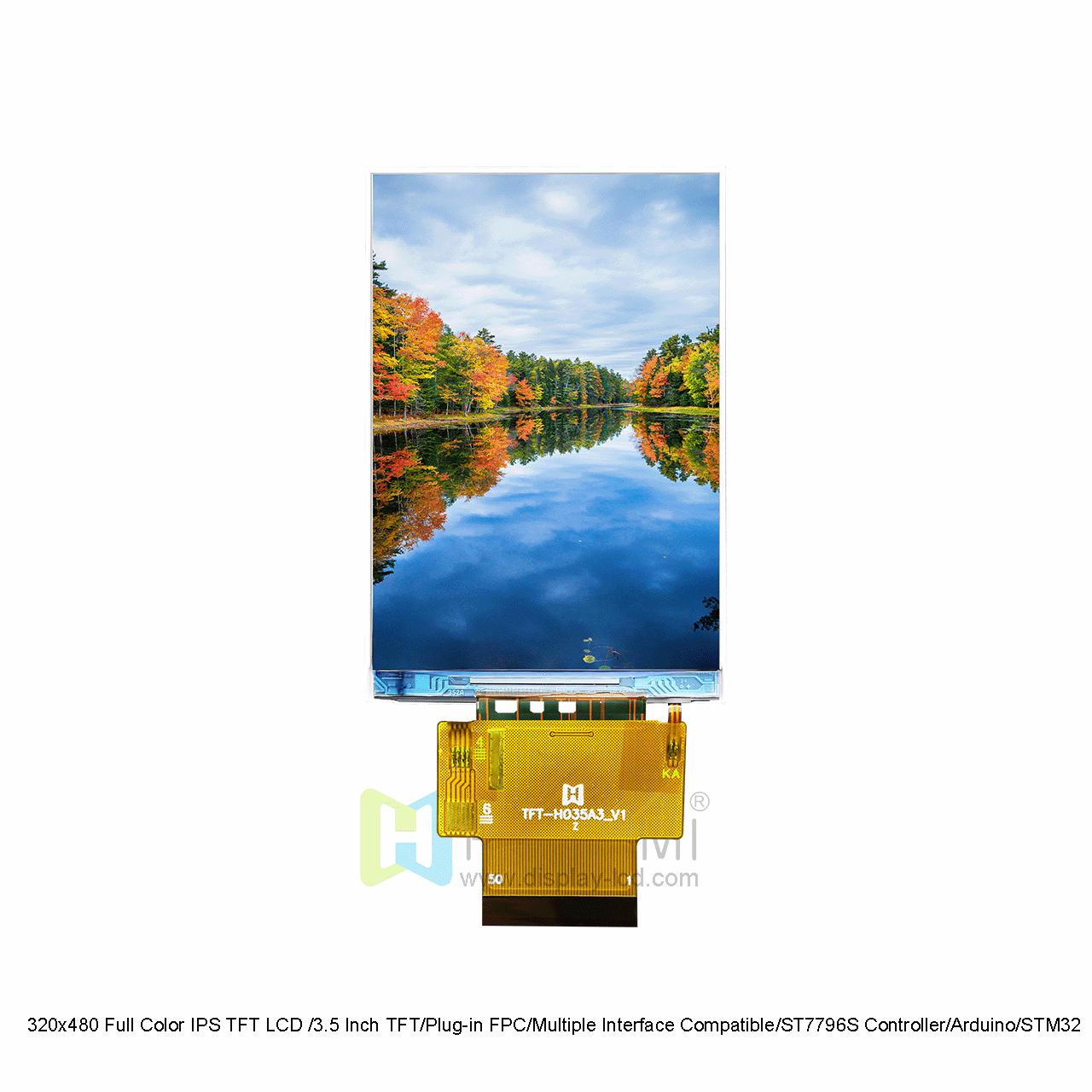
Consider IPS when:
Multiple users need to view the screen from different positions.
The product is installed at an angle or in a portrait orientation.
Interface graphics and consistent image appearance are important.
The display is used in industrial instruments, control equipment, smart terminals or embedded devices.
For outdoor or direct-sunlight applications, do not assume IPS alone guarantees readability. Evaluate brightness, reflections, cover glass, optical structure and ambient lighting together.
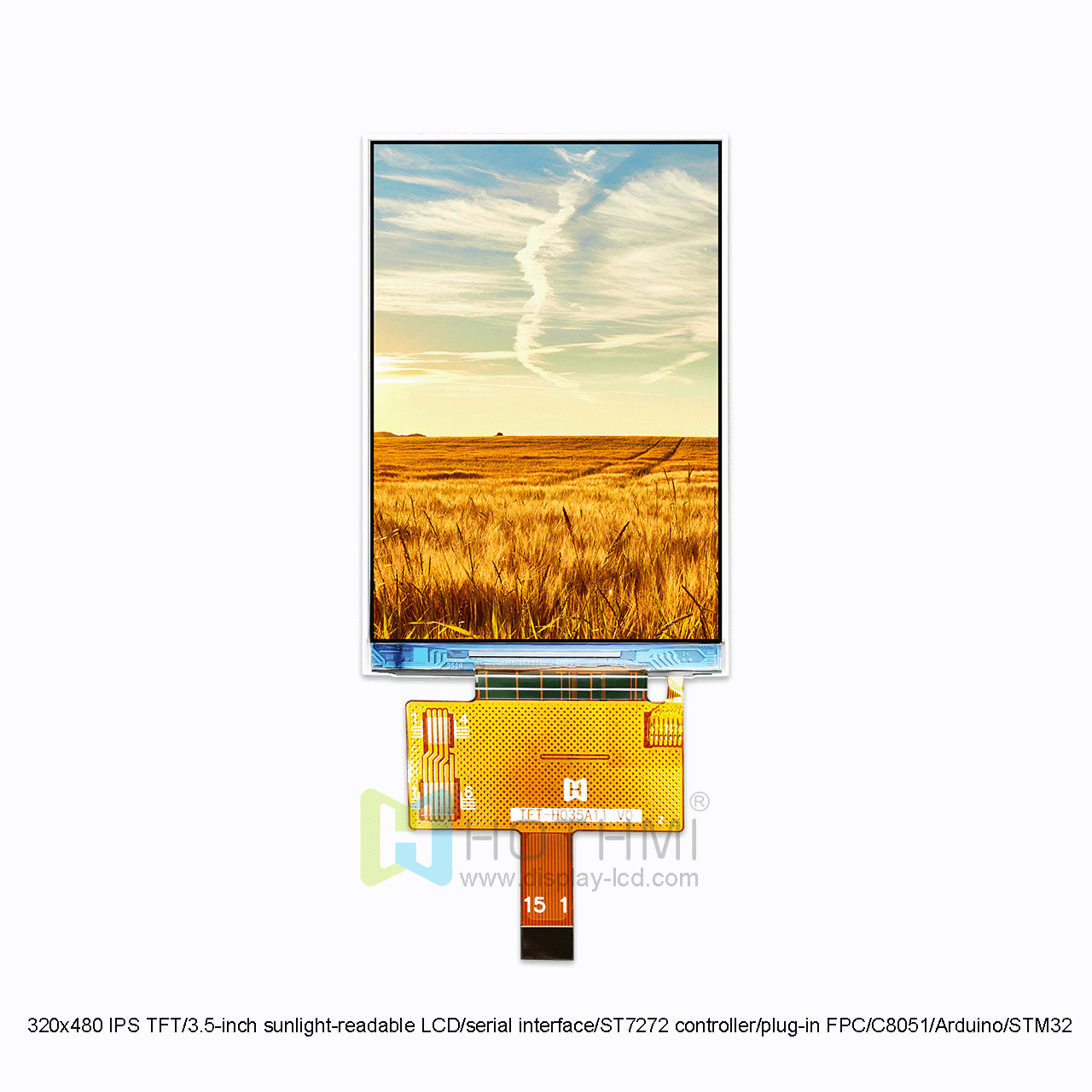
Assuming all IPS screens have the same viewing angle: Check the actual datasheet values.
Choosing by resolution alone: Verify brightness, contrast, interface and physical dimensions.
Assuming IPS means sunlight-readable: Confirm the specified brightness and the complete optical design.
Ignoring temperature: Select an operating-temperature range that covers the real installation.
Overlooking touch and cover glass: Confirm whether touch is integrated and whether the front structure fits the enclosure.
Not in every application. IPS is useful when viewing-angle and image-consistency requirements matter. Cost, power, brightness, interface and mechanical compatibility should also be considered.
The website lists selected IPS products with higher brightness specifications. The exact value depends on the model and should be confirmed in its datasheet.
Selected IPS display families offer touch configurations. Confirm size, touch type, controller and interface compatibility.
Selected models support customization of cables, touch structures and cover glass. Feasibility depends on the specific display and project.
Share the required size, resolution, brightness, viewing angle, interface, temperature range and touch requirements with HOTDISPLAY. We can help shortlist suitable IPS TFT products for engineering evaluation.
What did our happy clients say?