
Hotdisplay Technology Co., Ltd
When comparing TFT LCD screens, review the following parameters together:
| Specification | What it means for your project |
|---|---|
| Diagonal size and active area | Determines the visible display area and layout space |
| Resolution | Defines the number of pixels available for text, graphics and images |
| Interface | Must match the electrical and timing requirements of the host system |
| Driver IC | Affects initialization, commands and system integration |
| Brightness and viewing angle | Influence visibility in the intended viewing environment |
| Dimensions and FPC | Determine whether the display fits the enclosure and connector layout |
| Operating temperature | Must cover the actual environmental conditions |
HOTDISPLAY product examples include compact displays using SPI or RGB and other models using MIPI DSI or different interfaces. These are product-specific options rather than universal features of every TFT LCD screen.
For a new product: Define the screen size, resolution, host interface, available power, mounting space and viewing conditions before shortlisting models.
For an existing product redesign: Provide the current model number, datasheet, display outline and host-board details. A replacement must be checked for dimensions, pinout, voltage, initialization and display timing—not just screen size.
For a custom enclosure: Check active area, bezel overlap, FPC exit direction, connector access and the required cover-glass shape before freezing the mechanical design.
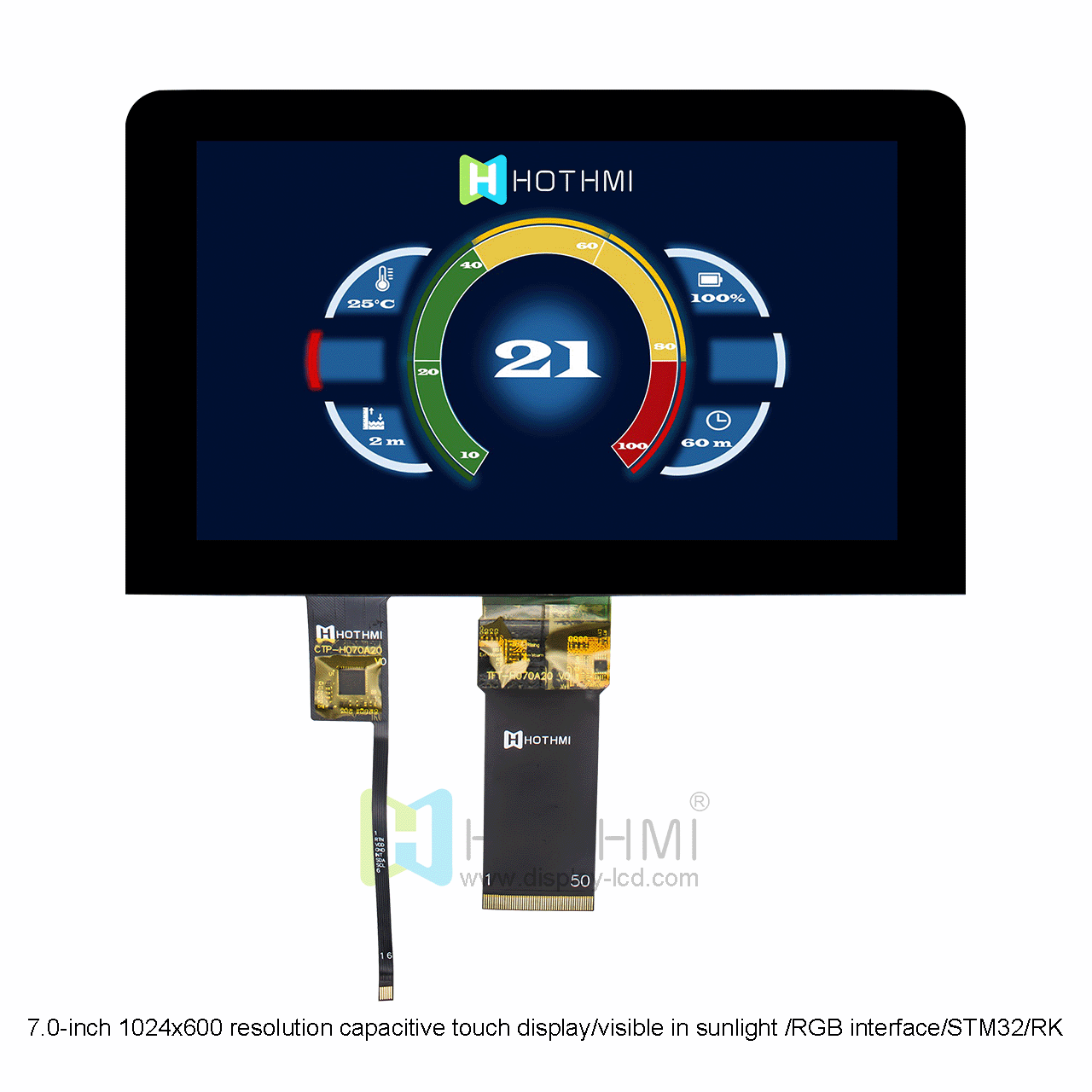
Depending on the selected model and project, customization may include:
FPC cable length, position, pinout or connector arrangement.
Touch-panel integration or a compatible touch option.
Cover-glass dimensions, shape and thickness.
Surface treatments such as anti-glare, anti-reflection or anti-fingerprint.
Review of interface requirements and display configuration.
Custom requests require technical review. An interface or mechanical change should not be assumed possible on every standard model.
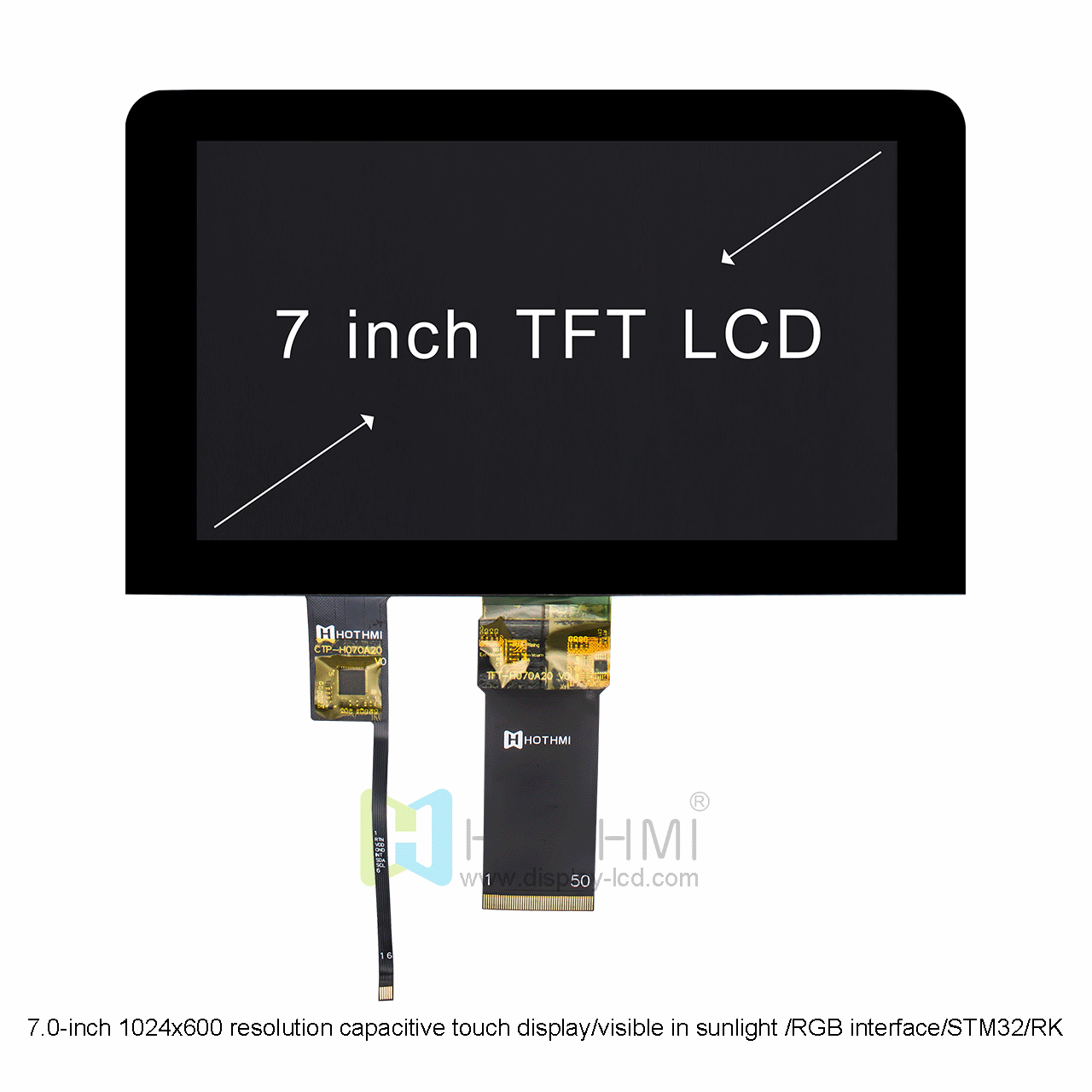
TFT LCD screens are suitable when a product needs a color graphical interface rather than a simple character or segment display. Typical applications include industrial instruments, control equipment, handheld devices, medical and measurement equipment, smart terminals and embedded electronics.
For projects where users view the screen from different angles, compare IPS options. If users must operate the device through the screen, evaluate the appropriate touch category as well.
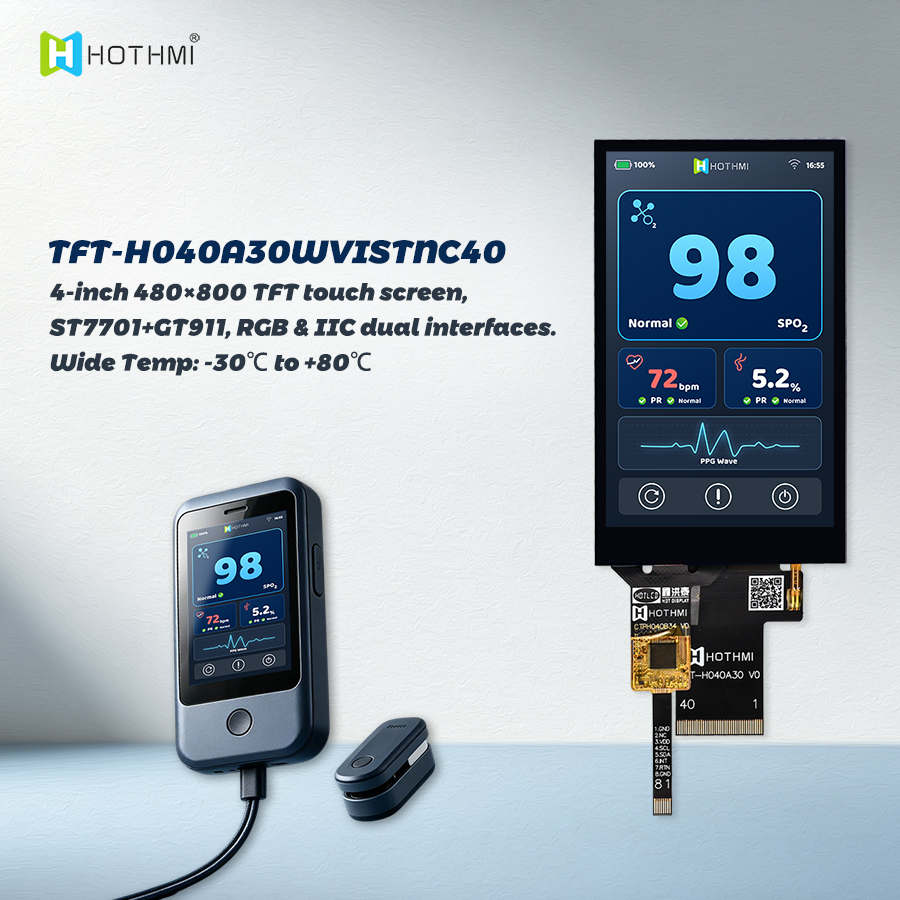
Interface mismatch: Confirm the exact interface, signal mapping, voltage and host compatibility.
Wrong dimensions: Compare the full outline and active area, not only the advertised diagonal.
Unverified brightness: Specify the required brightness and viewing environment; confirm the exact model's datasheet.
Replacement incompatibility: A similar-looking screen may use a different FPC pinout or driver IC.
Unclear touch scope: Confirm whether touch, controller, cover glass and bonding are included in the quoted configuration.
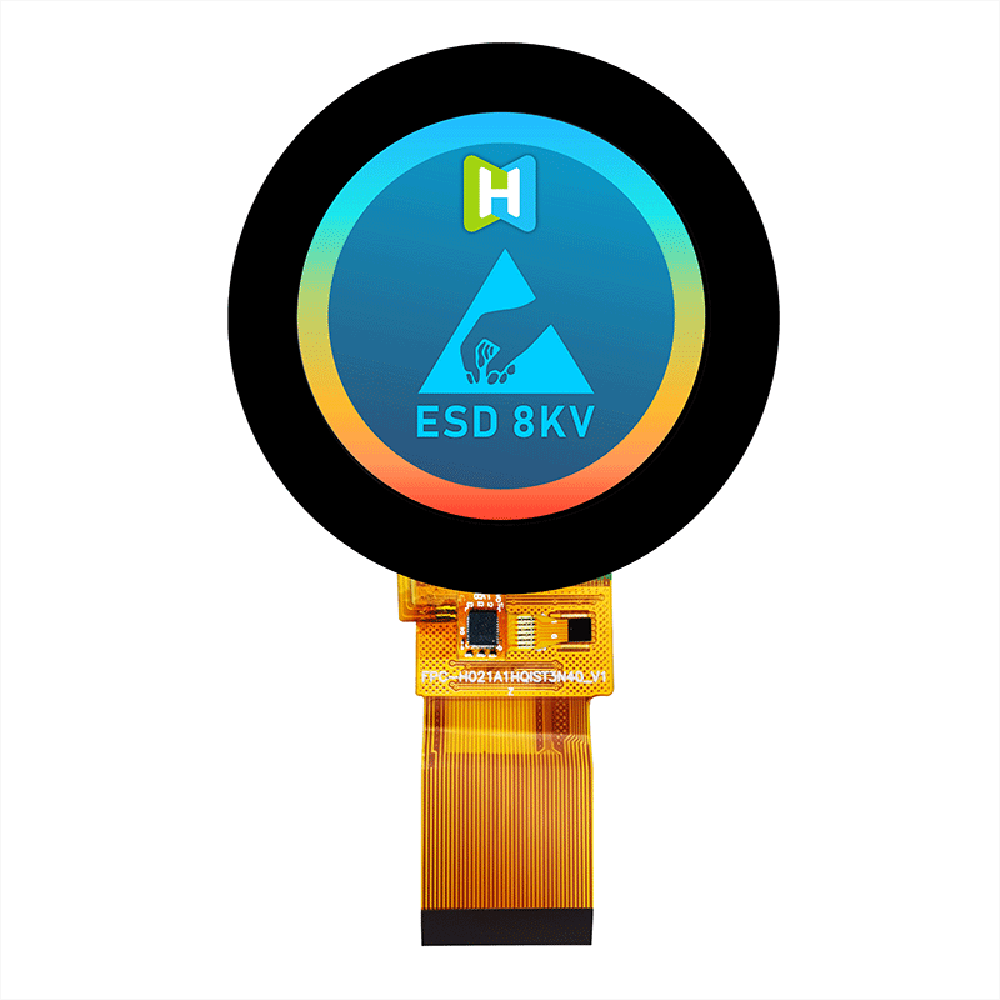
Yes. HOTDISPLAY lists models with different interfaces, including RGB, SPI and MIPI DSI among other product-specific configurations. Confirm availability for the required size and resolution.
Non-touch models are available. Some product families also offer touch-enabled variants; verify the exact model suffix and datasheet.
Selected products support cable-length, position, pinout and connector-related customization, subject to technical review.
Send the model number or datasheet, required quantity, interface, resolution, brightness, temperature range, mechanical drawing and touch requirements.
Share your project specifications with HOTDISPLAY to identify suitable standard displays and clarify any customization requirements before design validation.
What did our happy clients say?