
Hotdisplay Technology Co., Ltd
SPI can be practical for smaller displays, status screens, menus and graphical interfaces that do not require sustained high-bandwidth image updates. The actual achievable update rate depends on SPI clock frequency, bus configuration, resolution, color depth and software implementation.
For larger screens or demanding animations, compare SPI carefully against RGB or MIPI DSI options.
Display resolution and required frame update rate.
Controller IC and supported command set.
SPI mode, clock frequency and signal voltage.
FPC pinout and initialization sequence.
Available frame buffer memory and host processing capability.
Backlight requirements and optional touch integration.
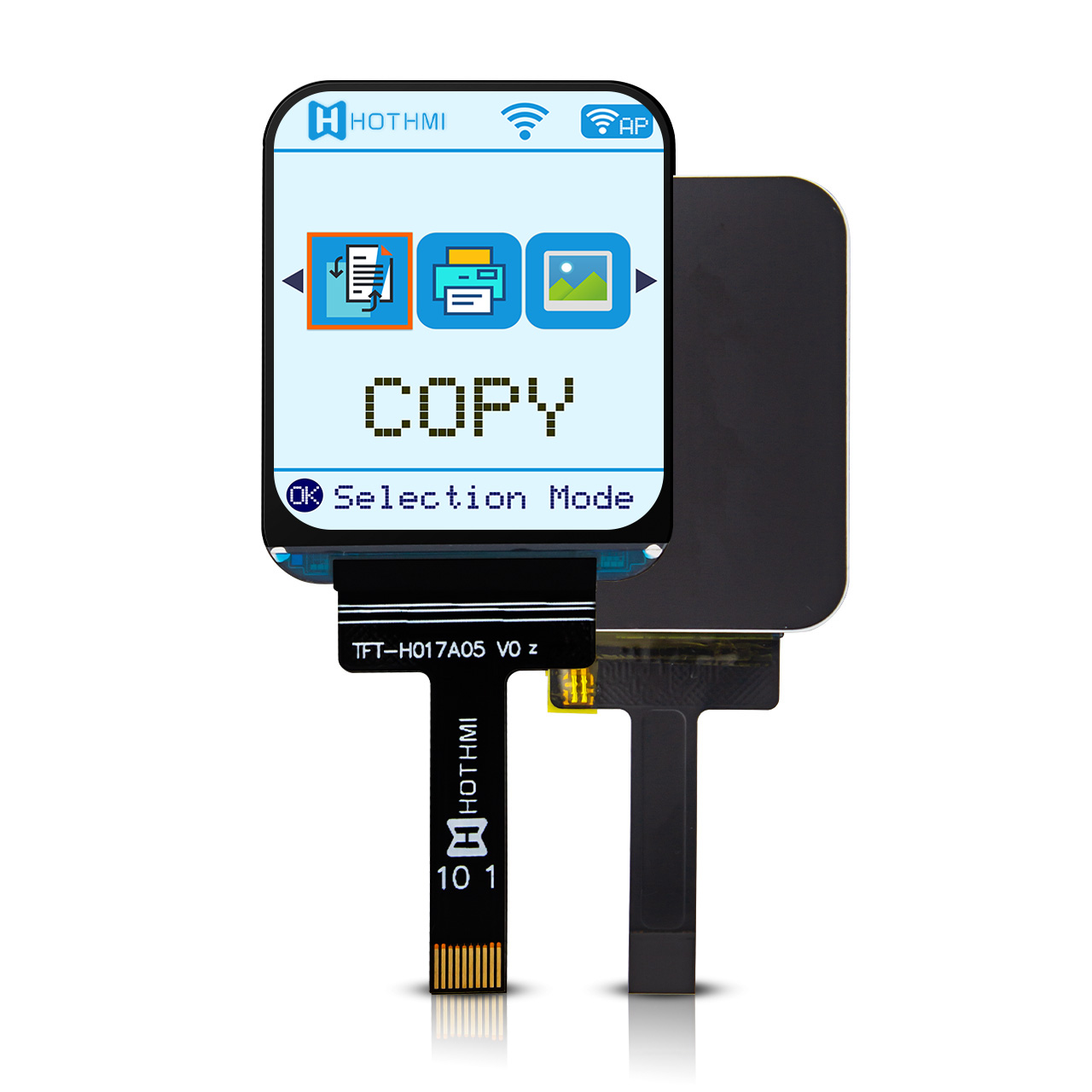
HOTDISPLAY's display portfolio includes SPI-related display options and interface accessories. Selection should be based on the exact controller IC and supported communication protocol rather than the general SPI label.
For development projects, share your MCU or processor model, software framework, target resolution and desired update behavior.
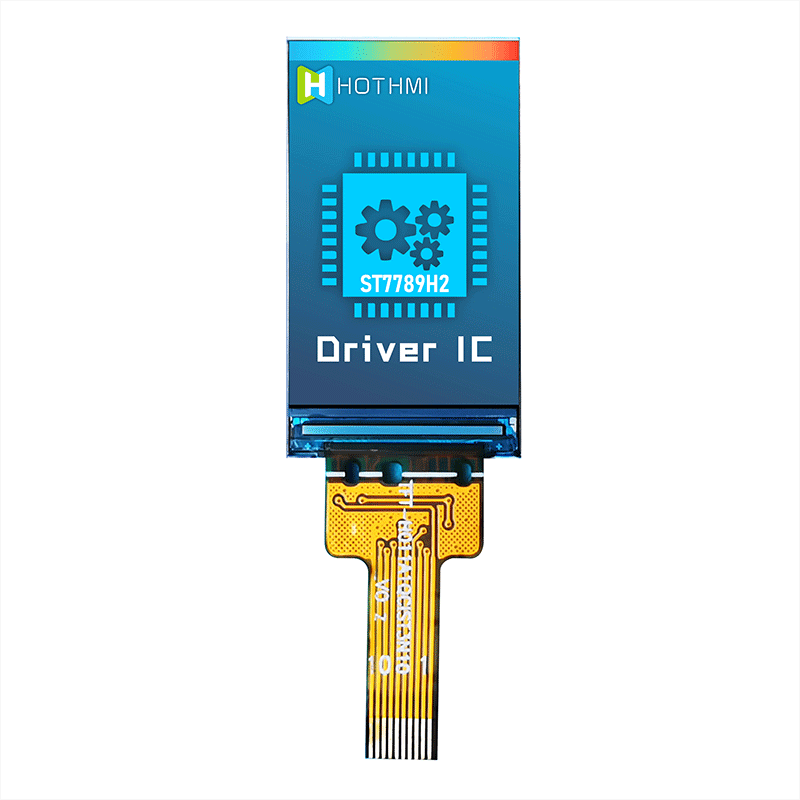
Wearables, handheld instruments, smart home controls, compact industrial displays, IoT equipment and low-pin-count embedded products.
It can support certain high-resolution use cases, but refresh performance may become a limitation as resolution and color depth increase.
Potentially, if the selected board, display controller, voltage levels and software libraries are compatible. Verify the exact model before design-in.
Compared with many parallel display interfaces, SPI generally requires fewer data connections, although additional signals may be needed for chip select, reset, data/command and backlight control.
Only if the host hardware, PCB and software architecture support the alternative interface. It is best to plan the interface before finalizing the board design.
Contact HOTDISPLAY with your controller model and display requirements to identify a practical SPI LCD candidate.
What did our happy clients say?