
Hotdisplay Technology Co., Ltd
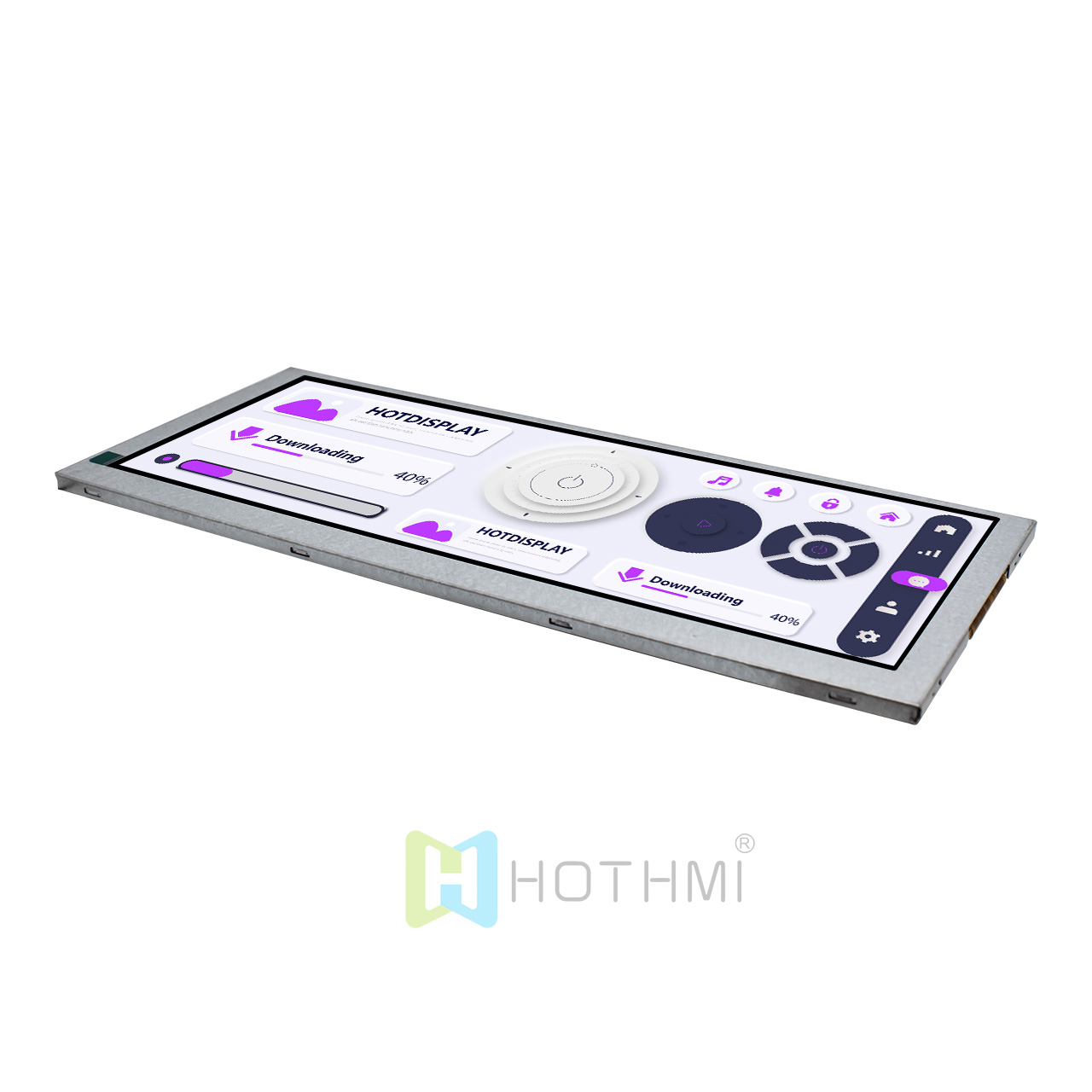
The TFT-H103W01ZMINV5N30 is a 10.3 inch bar-type TFT LCD module designed for wide-format visual interfaces.
| Specification | Details |
|---|---|
| Model | TFT-H103W01ZMINV5N30 |
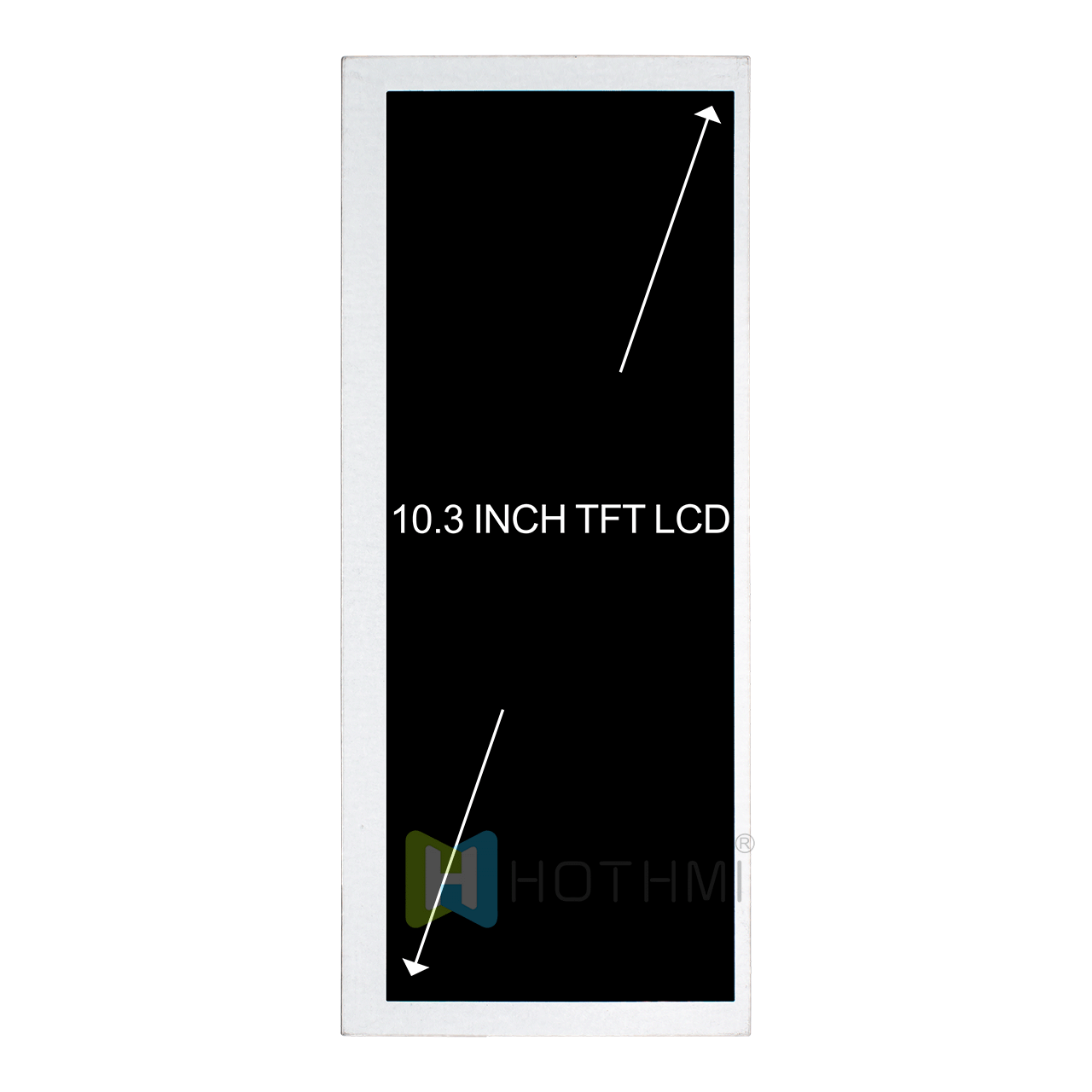
| Display size | 10.3 inch |
| Resolution | 1440 × 540 |
| Aspect ratio | 8:3 |
| Display type | TFT LCD, bar type |
| Viewing angle | IPS, 80/80/80/80 |
| Brightness | 450 cd/m² |
| Interface | MIPI |
| Driver IC | NV3051F |
| Module dimensions | 265.2 × 109.8 × 5.0 mm |
| Active area | 243.65 × 91.37 mm |
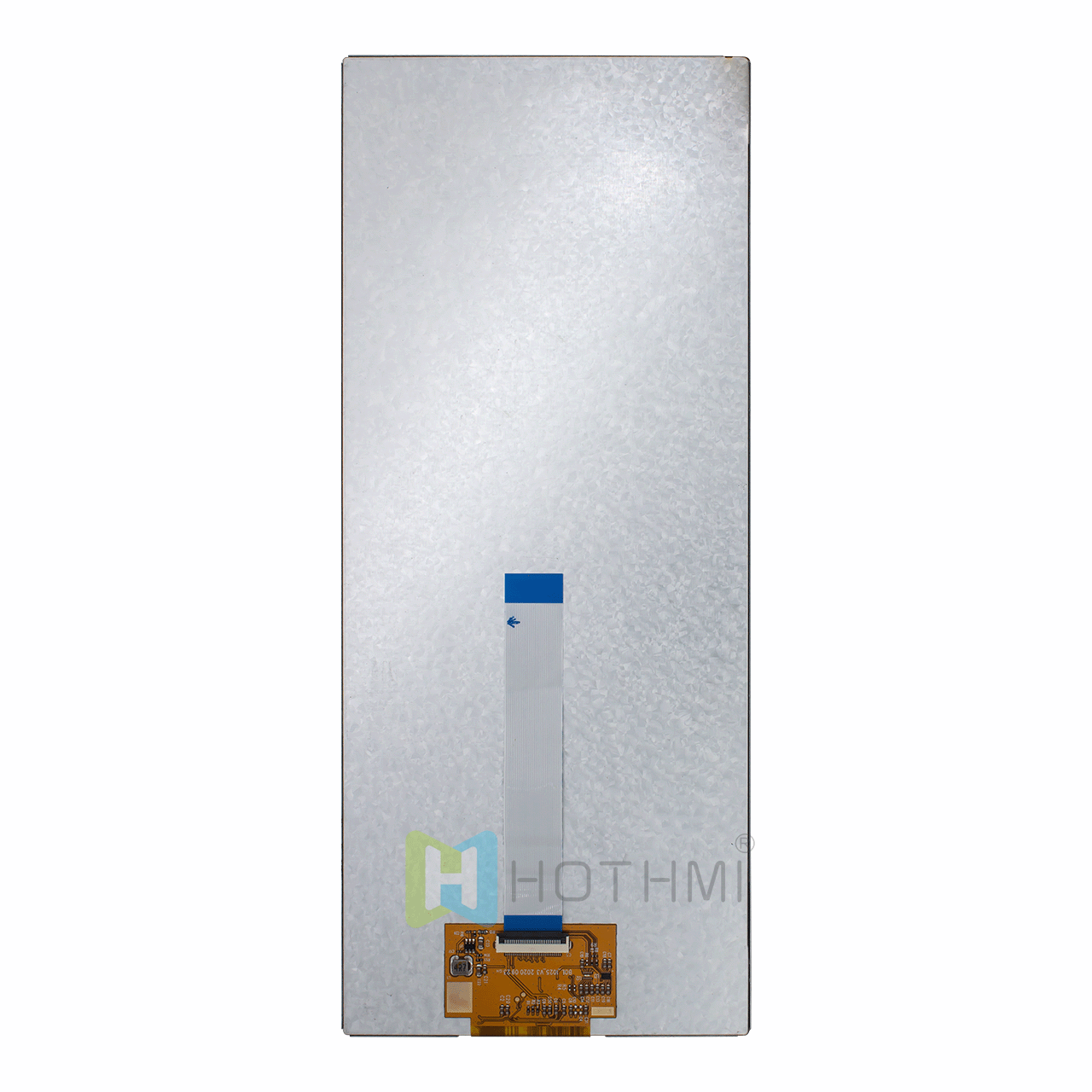
| Connector | 30-pin FPC |
| Supply voltage | 3.3 V |
| Operating temperature | -20°C to 70°C |
| Storage temperature | -30°C to 80°C |
| ESD protection | 8 kV |
| Touch | Standard listed version without touch; optional touch requires confirmation |
 | What These Features Mean for Your Project
|
When selecting a 10.3 inch display, the screen shape and system requirements are just as important as the diagonal size.
The 1440×540 format provides an elongated display area for applications with horizontal information layouts. It is suitable for specialized dashboards, instrument panels and embedded interfaces where a standard widescreen panel may not fit.
IPS technology supports wide viewing angles and consistent image appearance. It is useful for equipment viewed by operators from different positions.
The featured model uses a MIPI interface and an NV3051F driver IC. MIPI is suitable for compatible embedded display architectures, but host-system support and initialization requirements must be checked before integration.
The listed model is a non-touch version. Optional capacitive or resistive touch configurations are described in the product information and can be evaluated for projects that require user interaction. Confirm the available version, touch controller and mechanical configuration before ordering.
HotDisplay supports customers with display selection and project-specific integration requirements.
Display matching: Evaluate screen dimensions, resolution, brightness, viewing angle and operating temperature.
Interface compatibility review: Check MIPI connectivity, driver requirements, pin assignment and host-system support.
Touchscreen integration: Discuss capacitive or resistive touch options for interactive products.
FPC and connector solutions: Review cable routing, connector position, pinout and connection requirements.
Cover glass solutions: Evaluate cover dimensions and suitable surface treatments for the application.
Driver board evaluation: Discuss compatible driver or adapter board options when the host system requires an alternative connection solution.
Sample evaluation: Support specification review and sample testing before production planning.
Customization depends on the selected panel, technical feasibility and project requirements.
A bar-type LCD can offer an excellent fit for a specialized product, but it also requires careful evaluation of screen geometry, host compatibility and mechanical installation.
We review the device’s interface design, screen orientation, viewing distance and available installation space. This helps determine whether a 1440×540 bar-type display is suitable for the application.
We evaluate resolution, active area, viewing angle, brightness and temperature range against the product’s operating requirements. The goal is to balance visibility, performance and integration constraints.
MIPI support alone does not guarantee compatibility. We recommend checking the host processor, MIPI lane configuration, signal timing, driver IC, initialization sequence, connector and pinout against the display documentation.
We review the 265.2 × 109.8 mm module outline, 5.0 mm thickness, active area and FPC routing. For touch-enabled designs, the touch panel, cover glass and additional mechanical requirements need to be evaluated together.
Before volume production, use the applicable datasheet and samples to verify display output, electrical compatibility, image orientation, mechanical fit and touch performance where applicable.
The elongated screen format is suitable for products that need a wide information area within a limited vertical space.
Industrial instruments and control equipment: Present operating parameters, machine status and control information in a horizontal layout.
Transportation displays: Support selected dashboard and vehicle information interfaces where the display specifications meet the application requirements.
Smart devices: Provide wide-format visual interfaces for specialized embedded products.
Industrial monitoring systems: Display process data, system status and graphical information across a single elongated screen.
Custom electronic equipment: Fit product designs that require a non-standard screen ratio or a long, narrow display area.
Final suitability depends on the device’s environment, display orientation, host system and mechanical design.
Specialized display options: Explore bar-type display formats for designs that cannot use conventional widescreen panels.
Engineering-focused selection: Evaluate display parameters according to actual system and installation requirements.
Integration support: Discuss interface, FPC, touch and cover glass requirements for your product.
Technical documentation: Use product specifications and datasheets to support hardware evaluation.
Project-based cooperation: Coordinate sample assessment and production requirements according to the project.
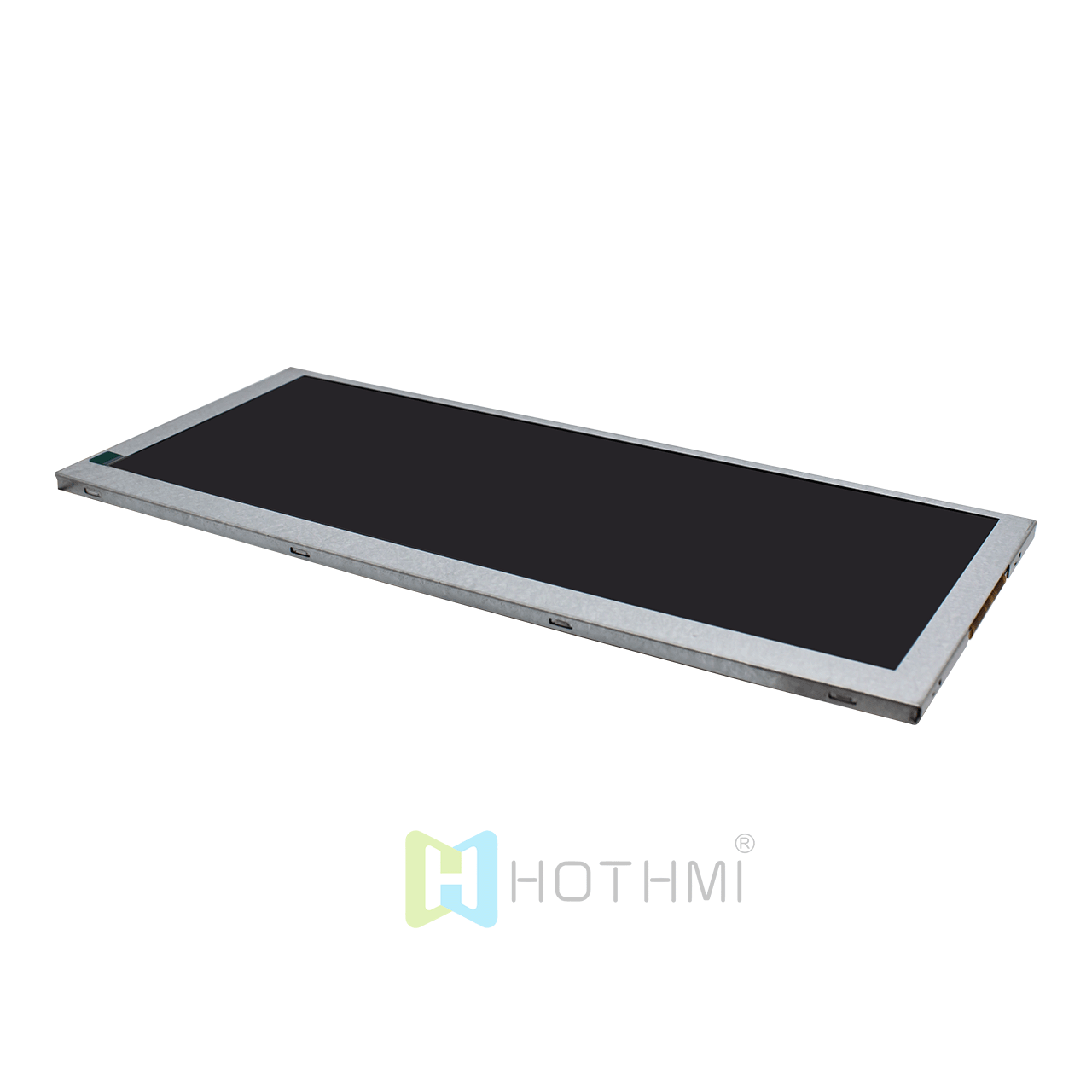
It is a color LCD module with an elongated screen shape. The featured model has a 1440×540 resolution and an 8:3 aspect ratio, making it suitable for wide horizontal interfaces and specialized equipment designs.
A standard widescreen LCD usually has a more conventional landscape ratio, while a bar-type display is longer and narrower. The 1440×540 format provides a horizontal information area that may fit instrument panels and embedded devices with limited vertical space.
The listed model has a brightness of 450 cd/m². It may suit many indoor environments, but direct sunlight readability cannot be determined from brightness alone. Reflection, cover glass, optical bonding and enclosure design should also be evaluated.
The featured TFT-H103W01ZMINV5N30 is specified with a MIPI interface and an NV3051F driver IC. Confirm the host system’s MIPI support, signal requirements and initialization sequence before integration.
The standard listed configuration is non-touch. Optional capacitive or resistive touch configurations are described in the product information, but the exact available version and integration details should be confirmed for your project.
The product information lists Android/RK applications and mentions Raspberry Pi among compatible development platforms. Actual compatibility depends on the specific board, MIPI interface support, driver configuration and software initialization. Confirm these details before design-in.
FPC and connector requirements can be evaluated according to the project. Share the required cable routing, connector position, pinout and mechanical drawings so the technical team can assess feasibility.
Please share your application, target quantity, host processor or development board, interface requirements, touch requirements, mechanical drawings and project schedule. This helps identify compatibility issues and clarify the appropriate configuration.
Looking for a 10.3 inch 1440×540 bar-type TFT LCD display for an instrument panel, industrial device or custom embedded product?
Send HotDisplay your application details, host-system information and mechanical requirements. Our team can help review the specifications and discuss a suitable display solution for your project.
What did our happy clients say?