
Hotdisplay Technology Co., Ltd
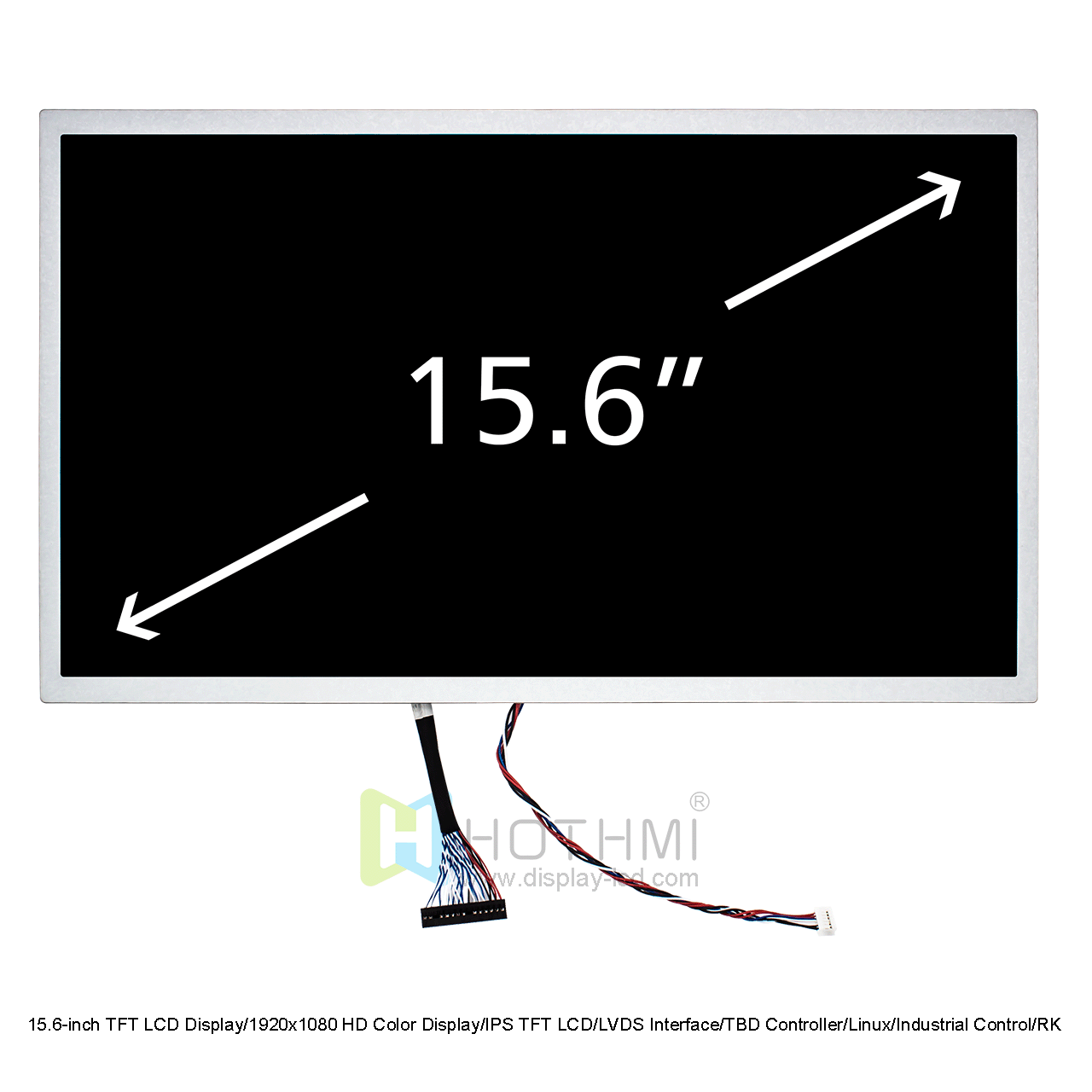 | What Is a 15.6 Inch TFT LCD Display?A 15.6-inch TFT LCD display is a flat-panel display module that uses thin-film transistor technology to control individual pixels and produce high-resolution color images. The 15.6-inch format provides significantly more visual space than smaller industrial displays, making it suitable for:
The right display should not be selected by screen size alone. Interface, resolution, brightness, viewing angle, mechanical dimensions, touch requirements, temperature range and long-term availability must all match the final equipment. |
| Parameter | 15.6" High-Brightness Model | 15.6" Capacitive Touch Model |
|---|---|---|
| Model | TFT-H156FHDIKN30-LVDS | TFT-H156FHDI8C30-LVDS |
| Display Size | 15.6 inches | 15.6 inches |
| Resolution | 1920 × 1080 | 1920 × 1080 |
| Display Type | TFT LCD / IPS | TFT LCD / IPS |
| Viewing Angle | Full View | Full View |
| Brightness | 1000 cd/m² | Project-dependent |
| Interface | LVDS | LVDS |
| Connector | FPC, 30-pin | Project configuration |
| Dimensions | 363.8 × 215.9 × 11.9 mm | 386.8 × 236.07 × 13.22 mm |
| Active Area | 344.16 × 193.59 mm | 344.16 × 193.59 mm |
| Touch | No touch | Capacitive touch |
| Supply Voltage | 3.3V | Confirm by configuration |
| Operating Temperature | -30°C to +85°C | Confirm by configuration |
| Driver IC | TBD | Confirm by configuration |
1920×1080 provides detailed images, text and graphical interfaces for information-rich industrial and professional applications.
The available 15.6-inch display configuration provides IPS full-view performance, helping maintain image visibility when the operator views the screen from different positions.
The high-brightness configuration reaches 1000 cd/m², providing improved visibility in bright indoor environments and selected high-ambient-light applications.
High brightness alone, however, does not guarantee direct-sunlight readability. Cover glass, surface reflection, optical bonding and the complete enclosure must also be considered.
The listed 15.6-inch models use LVDS, making them suitable for compatible industrial computers, embedded platforms and display controller solutions.
HotDisplay can help customers check LVDS timing, pin assignment, connector configuration and host-board compatibility before design-in.
HotDisplay provides both non-touch and capacitive-touch configurations within the 15.6-inch product range, allowing customers to select according to their interaction requirements.
The listed high-brightness model supports an operating temperature range of -30°C to +85°C, making it suitable for demanding equipment environments when the complete system is designed for the same conditions.
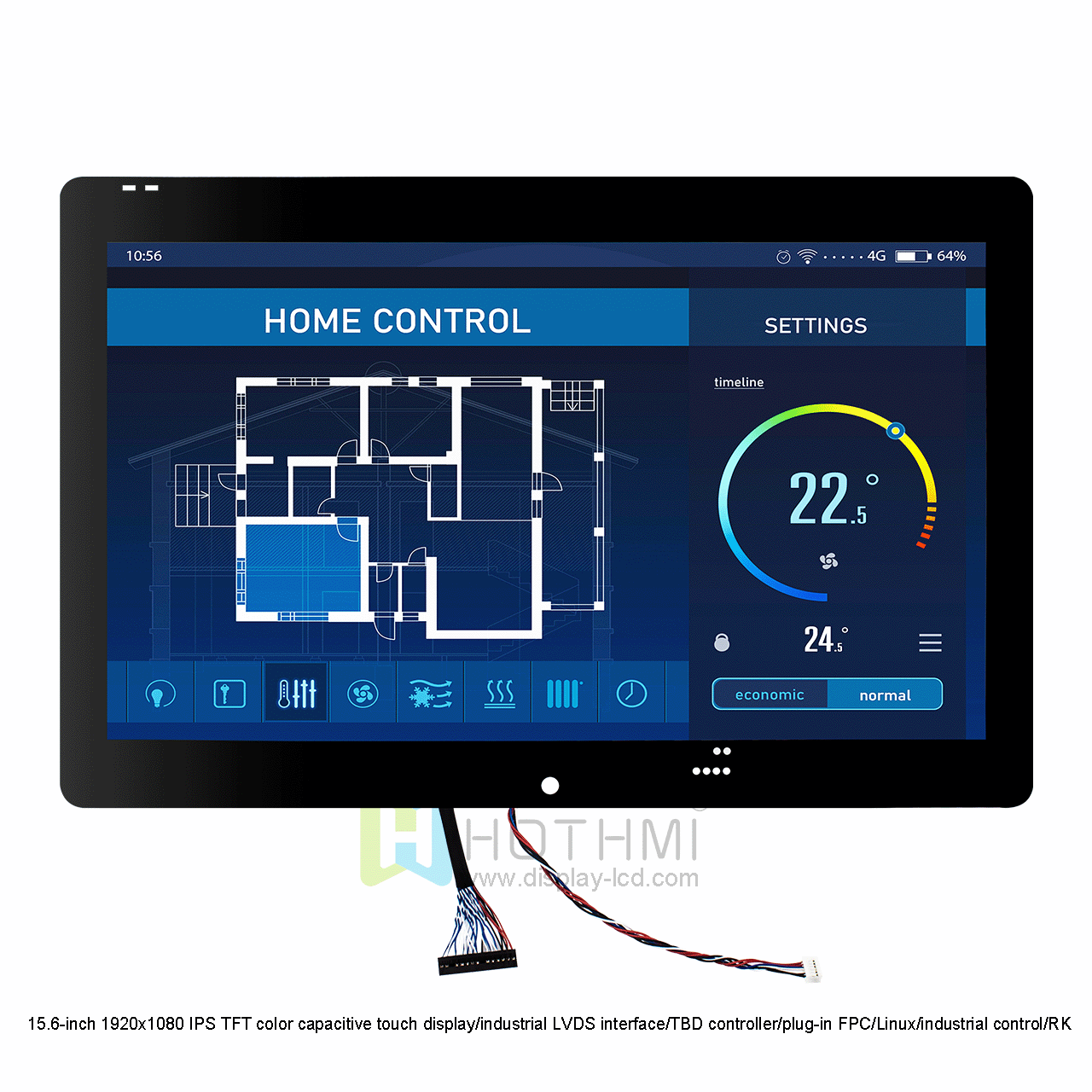
A 15.6-inch Full HD display provides sufficient space for process monitoring, machine controls, alarms, charts and operational data.
For interactive HMI equipment, a capacitive touchscreen can be integrated according to the required front-panel structure.
The display can be integrated into industrial PCs and embedded computers using compatible LVDS interfaces.
HotDisplay can help evaluate the host computer's resolution, LVDS configuration, connector and power requirements before sample approval.
The large Full HD viewing area is suitable for technical instruments, monitoring equipment and professional systems that require detailed graphical information.
The capacitive-touch configuration can be considered for terminals where users need direct interaction with software interfaces.
The 1000 cd/m² version is designed for applications requiring higher display brightness. For outdoor or direct-sunlight applications, HotDisplay recommends evaluating the entire optical stack rather than selecting the panel based only on its brightness rating.
HotDisplay's capability is not limited to supplying an existing LCD panel.
The company provides a broader display engineering and customization system covering LCD, PCBA, touch, FPC, interface, cover and related display components. Its product portfolio supports interfaces including MCU, RGB, LVDS, MIPI DSI, eDP, SPI/QSPI and HDMI.
This allows HotDisplay to approach a project from the customer's final equipment requirements rather than simply recommending a screen size.
Display SelectionWe evaluate:
| Interface EngineeringLVDS compatibility requires more than matching the connector. HotDisplay can help evaluate:
This reduces the risk of receiving a physically compatible display that cannot operate correctly with the customer's motherboard. | Touch IntegrationFor interactive equipment, HotDisplay can integrate a capacitive touch solution and evaluate:
| FPC and Mechanical CustomizationThe display must physically fit the customer's enclosure. HotDisplay can evaluate customized:
|
For high-brightness applications, HotDisplay can evaluate the complete display structure, including:
LCD → touch sensor → optical bonding → cover glass → surface treatment → enclosure
This is important because increasing LCD brightness alone cannot completely solve reflection or sunlight-readability problems.
HotDisplay supports engineering review, sample validation and production quality control. Its website also provides dedicated resources for manufacturing, production quality, testing standards and environmental compliance documentation.
For long-term industrial projects, the objective is not simply to deliver the first batch, but to establish a controlled display configuration that can be reproduced consistently.
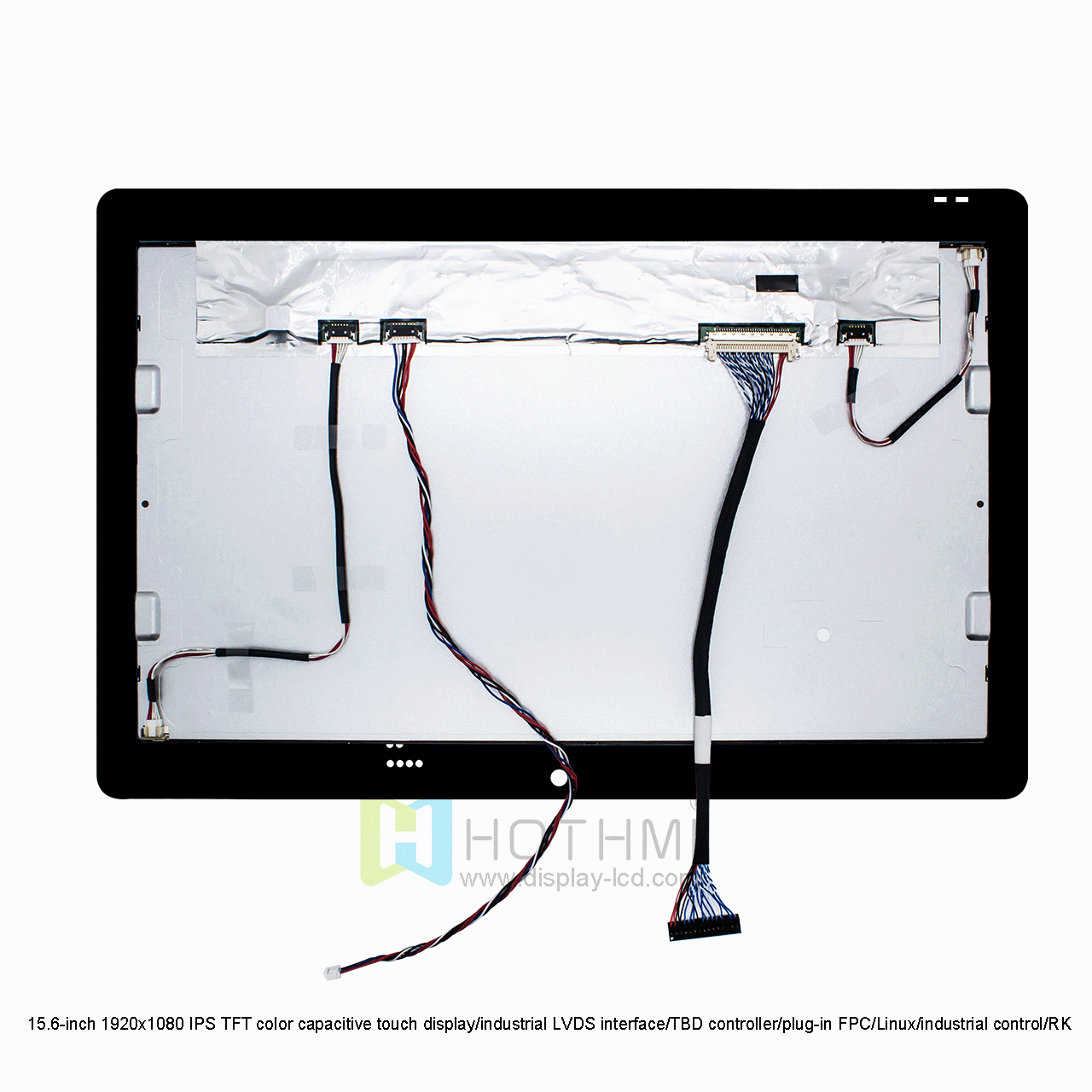
A 15.6-inch screen can have very different electrical and mechanical configurations.
Always confirm:
resolution + interface + brightness + viewing angle + dimensions + touch + temperature + power.
A 30-pin FPC does not automatically mean two displays are electrically compatible.
Request the complete pinout and timing information and compare it with the host board before purchasing samples.
1000 cd/m² is useful for bright environments, but actual visibility depends on:
Ambient light
Surface reflection
Cover glass
Optical bonding
Anti-glare treatment
Installation angle
For outdoor equipment, request an actual sample test under representative lighting conditions.
The 3.3V module supply should not automatically be treated as the complete backlight power requirement.
Confirm LCD logic power, LED backlight voltage/current and driver requirements separately during system design.
A high-brightness display normally requires more backlight power.
When the display is installed inside an enclosed industrial computer or control cabinet, heat from the LCD backlight and surrounding electronics can increase internal temperature.
Test the complete assembly—not only the LCD module.
If touch is required, specify whether the quotation includes:
Touch sensor
Controller
FPC
Cover glass
Optical bonding
Touch firmware/software support
A “touch display” should be defined as a complete configuration rather than only a touch sensor.
Industrial equipment can remain in production for years.
Before mass production, discuss:
Panel lifecycle
Driver IC availability
Approved configuration
Engineering change notification
Replacement strategy
Sample retention
Revision control
HotDisplay states that it aims for long-term product production and will try to replace discontinued IC or panel materials with compatible alternatives when necessary.
Common causes include incorrect LVDS pinout, incompatible timing, wrong channel configuration, backlight-control problems or an unsuitable controller.
HotDisplay recommends testing the actual display with the customer's host board before finalizing the production configuration.
Brightness is only one part of readability. Reflections from cover glass and the optical stack can significantly reduce perceived contrast.
For outdoor applications, evaluate brightness, surface treatment, bonding and cover glass together.
High-brightness backlights consume more power and generate heat. A sealed enclosure can further increase internal temperature.
Thermal simulation or actual system testing should be performed before mass production.
Yes. Depending on the project, HotDisplay can evaluate customized LCD configurations, touch solutions, FPC, interface, cover glass and related PCBA requirements.
Customization should begin with the customer's mechanical drawing, host interface and application environment.
The category identifies Linux, industrial control and RK systems as compatible application directions. Actual compatibility depends on the host board, LVDS output, timing, driver/controller configuration and software environment.
For an accurate recommendation, provide:
If replacing an existing LCD, provide the existing panel model or datasheet whenever possible.
HotDisplay's role is not simply to sell a 15.6-inch LCD panel.
We help customers move through:
Application Analysis → Display Selection → Interface Matching → Touch/FPC/Optical Design → Sample Testing → Engineering Validation → Mass Production → Quality Control → Long-Term Supply
This approach helps reduce the engineering risks that often appear after purchasing a display—interface incompatibility, mechanical mismatch, insufficient brightness, excessive heat, touch problems and future supply disruption.
Tell HotDisplay your application, host interface, mechanical requirements, brightness target and quantity.
Our engineering team can recommend a suitable 15.6-inch TFT LCD configuration and identify potential integration problems before they become production problems.
What did our happy clients say?