
Hotdisplay Technology Co., Ltd
Capacitive touch is commonly selected for modern interfaces that require smooth touch interaction and, on supported models, multi-touch gestures. Design factors include cover-glass thickness, touch controller, interface, surface treatment and the intended operating conditions. Explore capacitive TFT touchscreen
Resistive touch detects pressure applied to the touch surface. It may be appropriate for equipment requiring a pressure-operated interface or a specific interaction method. Confirm the touch construction, controller requirements and expected operating environment. Learn more Resistive touch screen
If the product only needs visual output, a non-touch display may simplify the user interface and avoid adding an unnecessary touch layer. Choose touch only when the product design benefits from direct screen interaction.
Depending on the selected model, available options may include:
TFT LCD screen with a capacitive or resistive touch configuration.
Touch-panel dimensions and cover-glass customization.
Selected FPC cable length, position and pinout adjustments.
Cover-glass thickness, shape, color and printed border options.
Surface treatments such as AG anti-glare, AR anti-reflection and AF anti-fingerprint.
Selected bonding or structural options, subject to product compatibility.
For example, HOTDISPLAY's product pages list touch displays with different driver ICs, interfaces and operating-temperature ranges. Those specifications must be checked model by model.
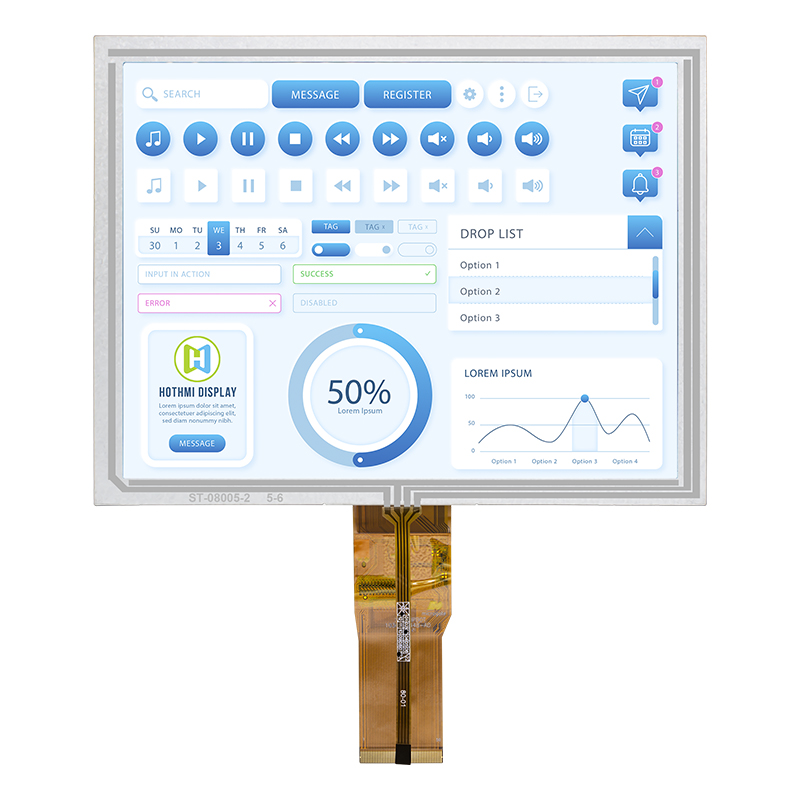
For a custom project, begin with the required display size, resolution and mechanical outline. Then specify touch technology, cover-glass shape, thickness, viewing window, surface finish, controller interface and cable routing.
If the screen must sit flush with the enclosure, provide a front-panel drawing showing the visible window, mounting area and edge clearances. If the product is used in bright environments, discuss glare, reflections, brightness and cover-glass treatment together rather than considering them separately.
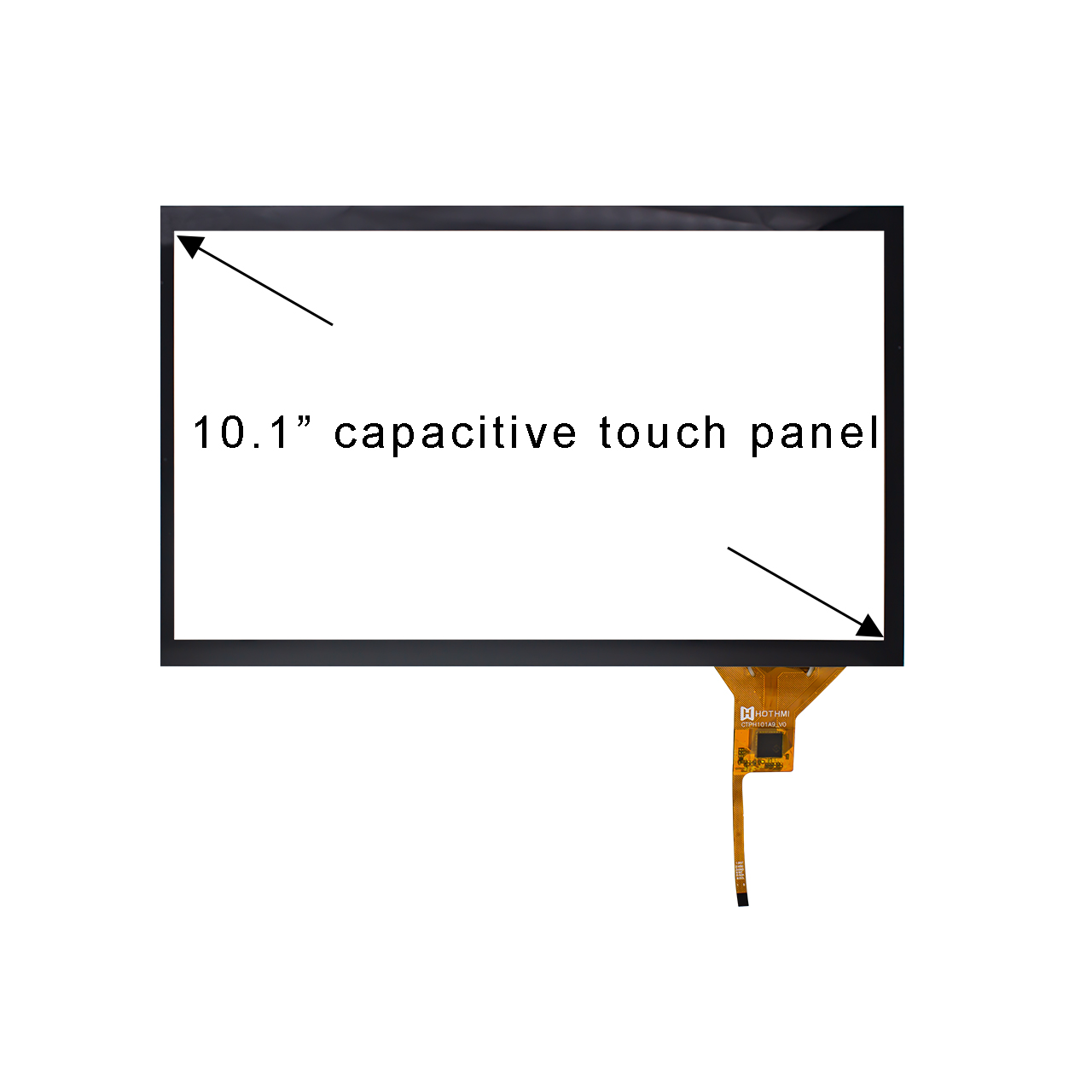
Is the touch panel included with the display, or supplied separately?
Does the host system support the touch controller's communication interface?
Is the touch area aligned with the active display area and the enclosure opening?
Does the selected cover glass meet the project's thickness, shape and surface-treatment requirements?
Is optical bonding required, and is it available for the selected configuration?
Has the complete assembly been tested with the actual host board and enclosure?
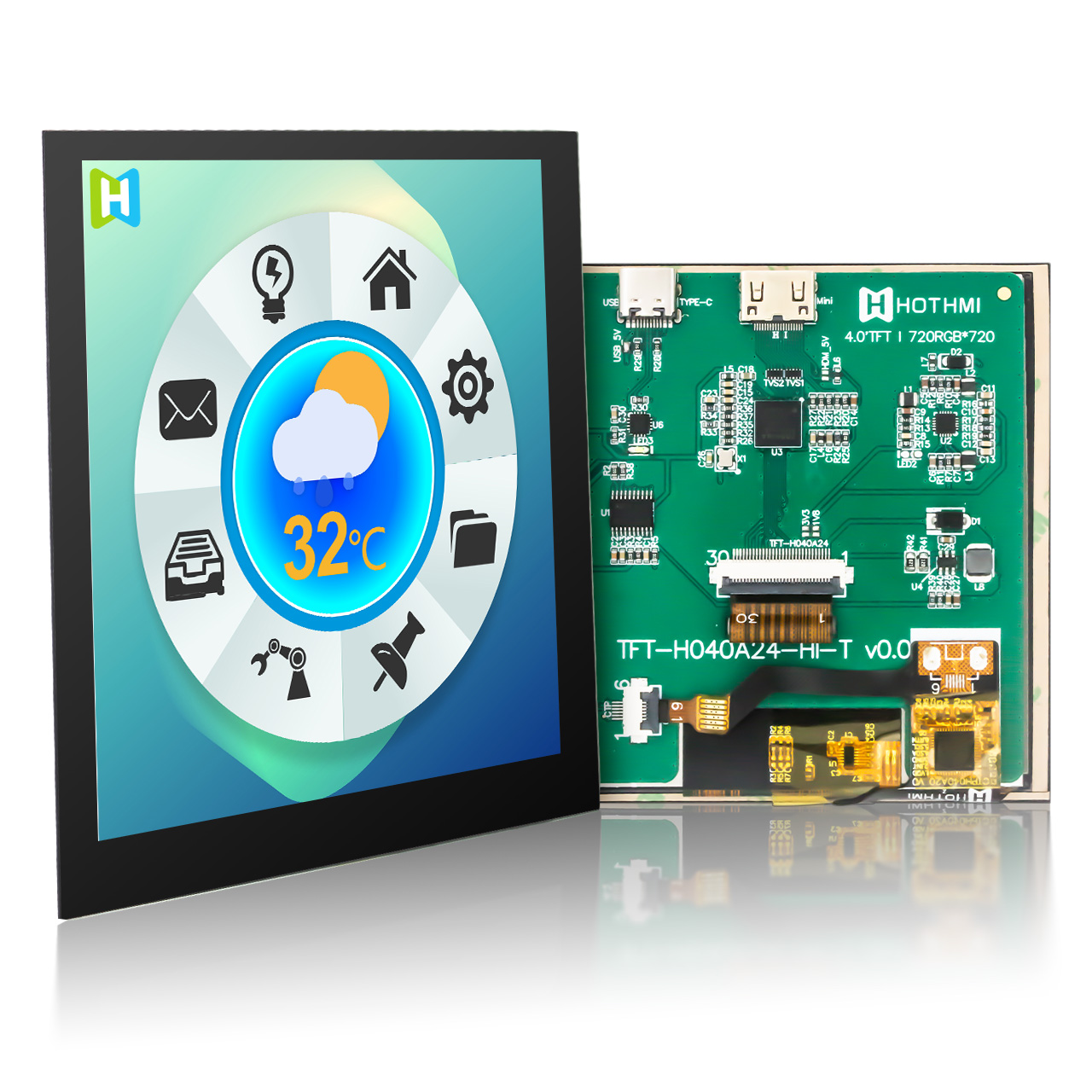
TFT touch screens are used in industrial HMIs, smart appliances, handheld instruments, medical and measurement equipment, access terminals, control devices and other products that combine graphical information with user input. The exact configuration should be chosen for the actual application, not solely by screen size.
HOTDISPLAY lists both touch technologies across selected products. Availability depends on the display size and model.
Selected touch products support customization of cover dimensions, thickness, shape, printed areas and surface treatments. Confirm the feasible options for your project.
Not necessarily. Display and touch may use different controllers and communication interfaces. Check both interfaces before system design.
Non-touch TFT displays are available in the product range. Specify clearly whether you need a display only, a separate touch panel or an integrated touch display.
Send HOTDISPLAY your display size, touch requirements, host interface and mechanical drawing. We can help you identify compatible products and evaluate suitable customization options.
What did our happy clients say?