How to Select the Right TFT Display
The correct TFT display should not be selected by screen size alone.
1. What size do you need?
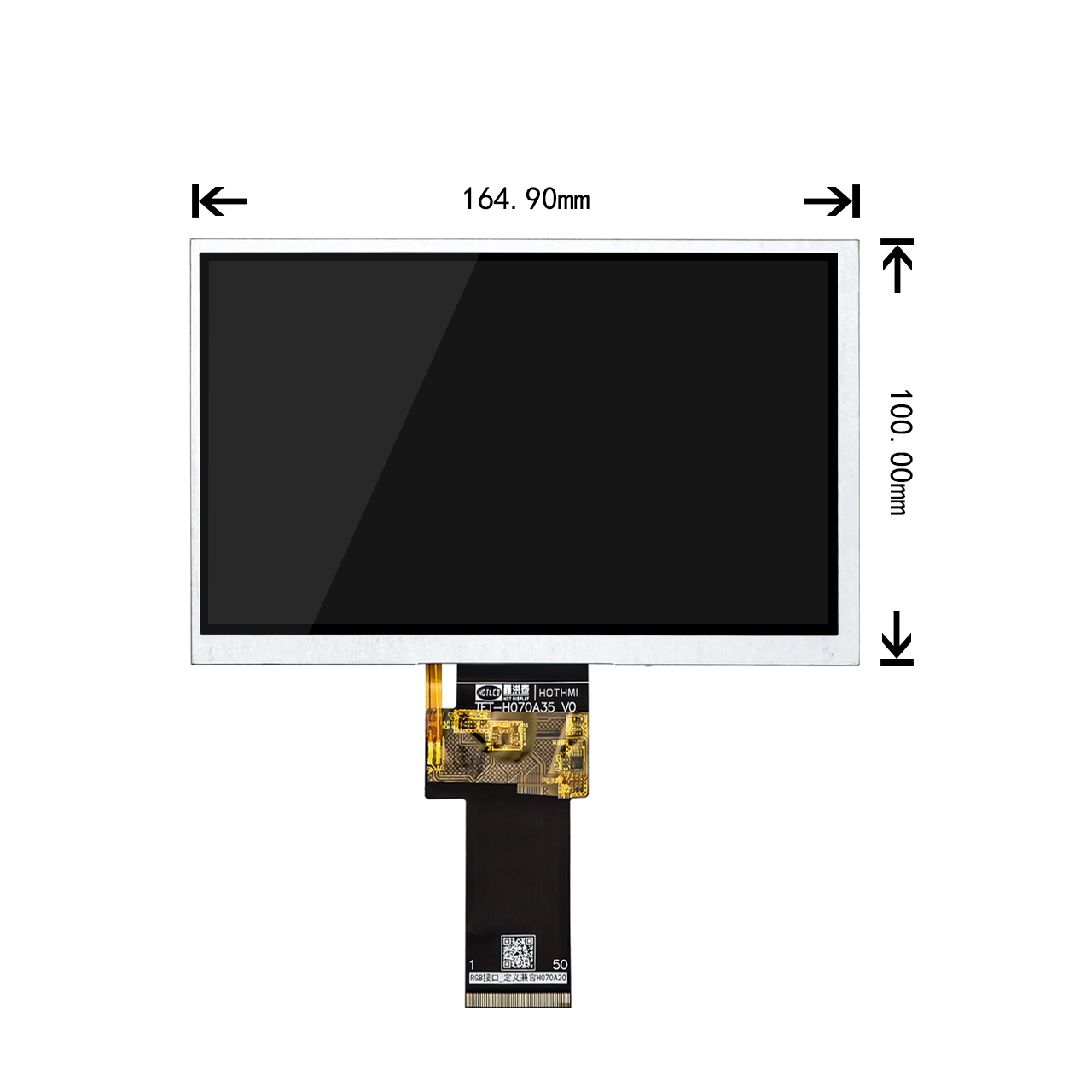
Mechanical installation space determines the maximum display dimensions.
2. What resolution is required?
Resolution should match viewing distance, graphical content and processor capability.
3. Does the display need touch?
For operator interfaces and smart equipment, capacitive or resistive touch can be integrated according to the application.
4. Is the display used outdoors?
Outdoor applications may require higher brightness, transflective technology or optical surface treatment.
5. What interface does your controller support?
The display interface should match the host processor or control board.
6. What temperature will the product experience?
Industrial and outdoor equipment may require a wide-temperature TFT LCD rather than a standard commercial display.
Why Choose HOTDISPLAY?
HOTDISPLAY has more than 20 years of LCD manufacturing experience and offers more than 2,000 standard display and touch products. The company also provides R&D and customized display services for OEM/ODM projects.
FAQs about TFT Display
What is the difference between TFT and TFT LCD?
TFT refers to the thin-film transistor active-matrix technology, while TFT LCD refers specifically to an LCD using TFT technology.
Can HOTDISPLAY customize a TFT display?
Yes. Customization can include touch, FPC, PCBA, cover glass, interfaces, mechanical structure and other display-related requirements.
Can TFT displays be used outdoors?
Yes. Depending on the environment, HOTDISPLAY can provide high-brightness, transflective and wide-temperature display solutions.
Can I use TFT with Arduino or STM32?
Selected HOTDISPLAY TFT modules support interfaces and controllers compatible with platforms such as Arduino, STM32 and other embedded systems.