
Hotdisplay Technology Co., Ltd
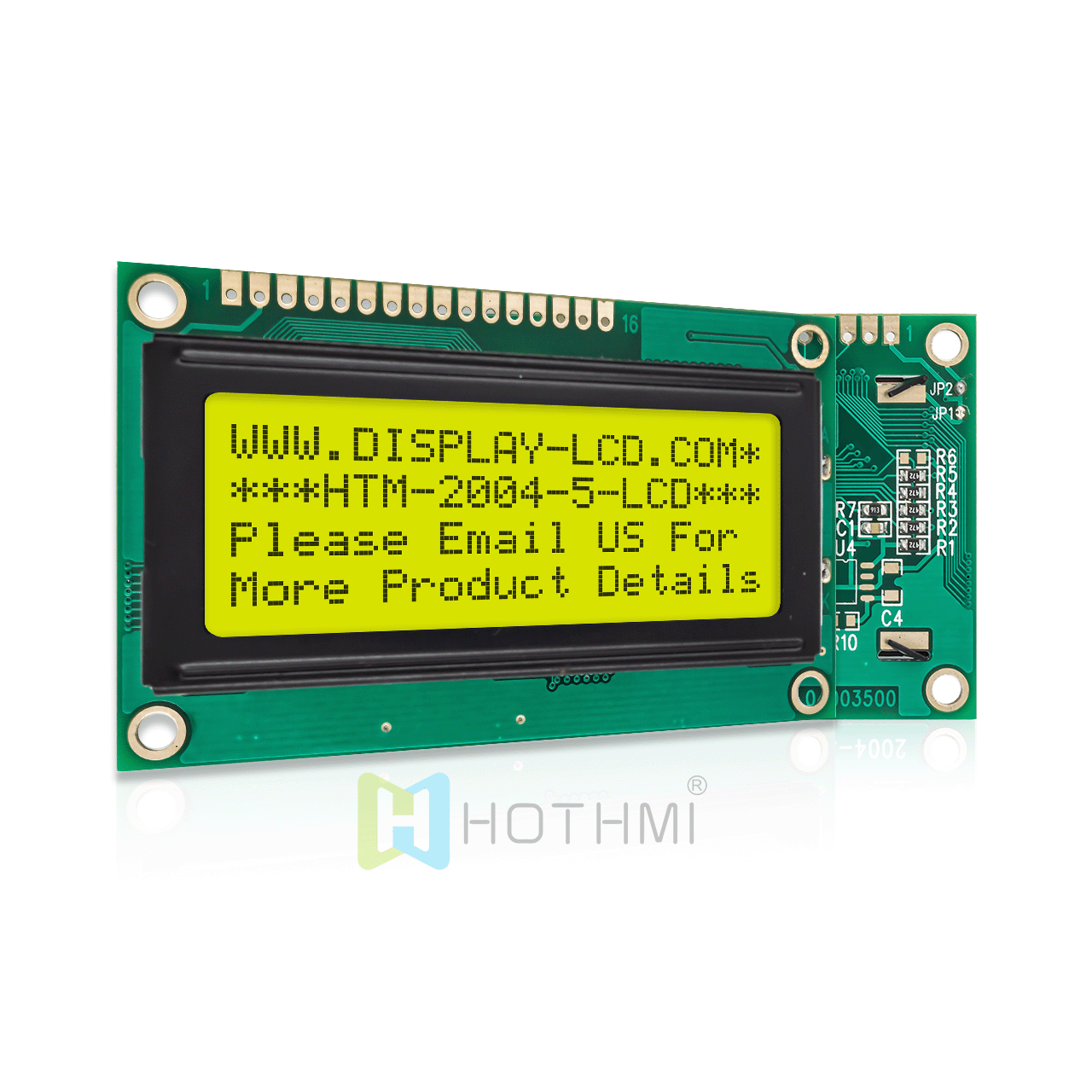 | What Is a Character LCD Module?A character LCD module displays information in rows and columns of predefined character cells. For example, a 16×2 character LCD can display 16 character positions per row across two rows, providing a total of 32 character positions. Depending on the model, the display may support letters, numbers, punctuation and selected symbols. Character sets vary by controller and module, so language requirements should be confirmed before selection. Character LCDs are particularly useful when the interface mainly needs to communicate text and numerical values rather than arbitrary graphics or full-color images. |
HOTDISPLAY's character LCD range includes TN, STN, FSTN and DFSTN options, depending on the model.
The selected LCD technology affects optical characteristics such as contrast and background appearance. The best option depends on viewing direction, lighting conditions, display content and the intended enclosure.
Positive and negative display configurations provide different combinations of background and character appearance. The actual result depends on the LCD mode, polarizer and backlight.
When comparing models, evaluate the complete display under the intended lighting conditions instead of selecting solely by the product name.
The published character LCD range includes yellow-green, white, red, blue, green, yellow and RGB LED backlighting, together with non-backlit options for relevant models.
Backlight choice affects readability, appearance and power consumption. Confirm the available colors and electrical requirements for the selected model.
HOTDISPLAY's published range includes character-set options for English/Japanese, Western European, Eastern European, Russian and Hebrew/Arabic scripts.
Character availability and code mapping depend on the built-in character generator and controller. For languages requiring special characters or nonstandard scripts, verify actual font coverage before purchasing.
HOTDISPLAY's published character LCD catalogue includes multiple standard layouts:
8×2 Character LCD: For compact status messages and simple embedded interfaces.
16×1 Character LCD: For a single line of information in narrow or space-constrained designs.
16×2 Character LCD: For common two-line text and numeric displays.
16×4 Character LCD: For interfaces requiring four rows of compact information.
20×2 Character LCD: For longer text or numerical readings across two rows.
20×4 Character LCD: For multi-line menus, operating parameters and status messages.
40×2 Character LCD: For applications requiring long lines of text.
40×4 Character LCD: For larger text-based interfaces with multiple rows.
These formats are examples from the existing product range. Confirm the available model, dimensions, controller and electrical specifications before finalizing a design.
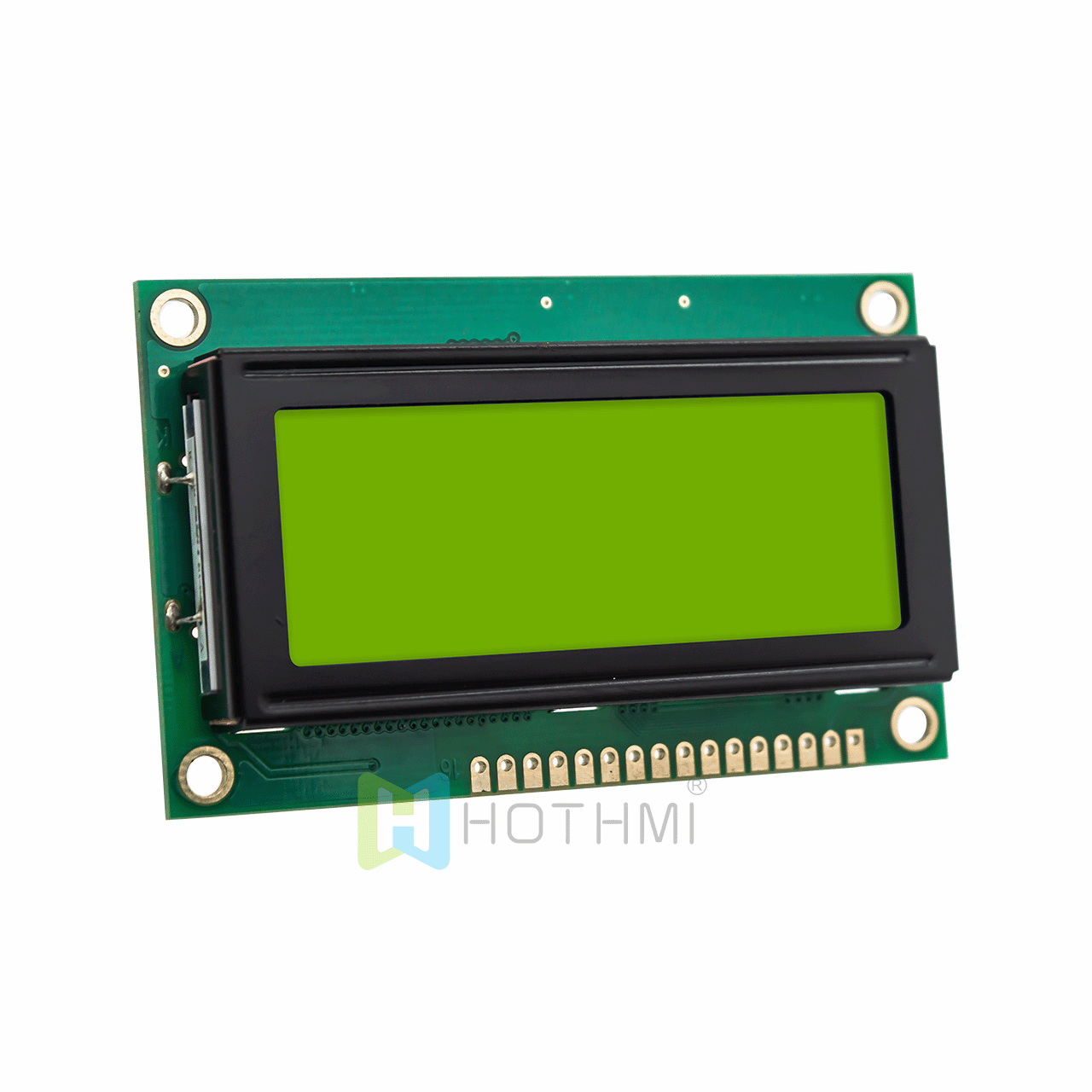
Character LCD: Best suited to structured text, numbers and messages using a defined character grid.
Graphic LCD: Best suited to custom icons, pixel-based graphics, flexible text placement and simple graphical interfaces.
Segment LCD: Best suited to fixed numerical patterns, symbols and dedicated indicators.
If your product mainly displays text and numerical information, a character LCD may simplify the software and interface design. If the display needs arbitrary graphics or a custom pixel layout, evaluate a graphic LCD module instead.
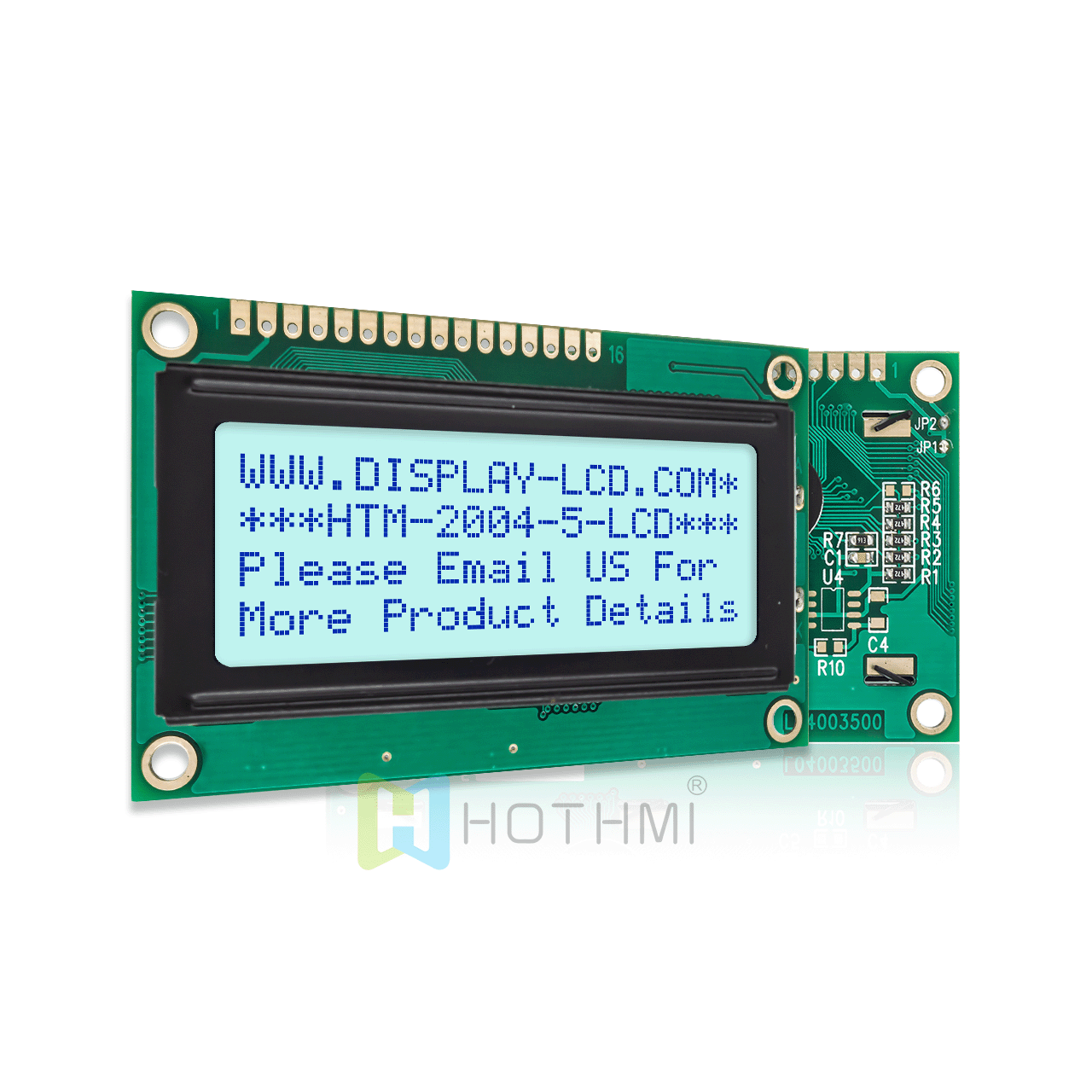
Estimate the maximum characters per line and the number of lines required by the interface. Consider whether measurements, units, prompts and status messages must appear simultaneously.
Compare available TN, STN, FSTN or DFSTN models according to the desired contrast, background appearance, viewing requirements and lighting environment.
Check the driver IC, MCU interface, data width, pinout, initialization sequence and host compatibility. A familiar character format does not guarantee that two modules are electrically interchangeable.
Confirm the module's supply voltage, logic requirements and backlight power. Some models operate at 5 V, while other configurations may have different electrical requirements.
Check the overall dimensions, visible area, active area, character pitch, mounting holes and connector position to ensure that the module fits the enclosure.
Review the rated operating-temperature range and the actual environment in which the display will be used. Temperature suitability should be verified from the selected model's datasheet.
Display machine status, operating modes, error messages, parameter values and control instructions.
Present readings, units, settings and measurement status through a simple text-based interface.
Show selected measurements, operating information and prompts, subject to the device's applicable requirements.
Display temperature, timers, operating modes and other predefined information.
Support text and numeric information in selected instrument, audio and control applications.
Provide a practical display interface for microcontroller-based equipment. Selected HOTDISPLAY models specify compatibility with Arduino-class development boards and common MCU platforms, subject to the interface and voltage requirements.
It means the display has 2 rows, each containing 16 character positions. The total capacity is 32 character positions, although the exact characters available depend on the controller's character set.
This depends on the controller's built-in character generator and available character sets. Do not assume that every character LCD supports Chinese or arbitrary Unicode text. Confirm language requirements with HOTDISPLAY before selecting a module.
Selected models support common MCU interfaces and development platforms. Check the module's driver IC, pinout, voltage, data interface and initialization requirements before integration.
A 16×2 module offers two rows of 16 characters, while a 20×4 module offers four rows of 20 characters. The larger format provides more text capacity but usually has different mechanical dimensions and interface considerations.
HOTDISPLAY's published range includes several backlight color options. Availability depends on the model, and the electrical requirements should be checked before choosing a color or RGB configuration.
Not necessarily. Even when both modules are 16×2, they may differ in dimensions, pinout, controller, voltage, backlight, character set and mounting. Verify the full datasheet before substitution.
The available options depend on the controller and manufacturing configuration. Standard character modules use predefined character cells and built-in fonts. If you need custom symbols, specialized characters or flexible graphics, discuss the requirements with HOTDISPLAY or consider a graphic LCD.
Provide the character format, required language, LCD technology, display appearance, backlight color, supply voltage, interface, dimensions, operating temperature and estimated order quantity.
HOTDISPLAY provides character LCD module options for industrial, commercial and embedded products, with multiple character formats, optical configurations and backlight choices.
Share your display requirements, existing part number or mechanical drawing to identify a suitable character LCD module and confirm its compatibility with your hardware.
What did our happy clients say?