Hotdisplay Technology Co., Ltd
Choosing an LCD interface is an important step in embedded display design. The interface affects data bandwidth, pin count, PCB routing, power requirements, host compatibility and software development.
There is no single best LCD interface for every project. The right choice depends on screen resolution, refresh requirements, available processor resources and the intended application.
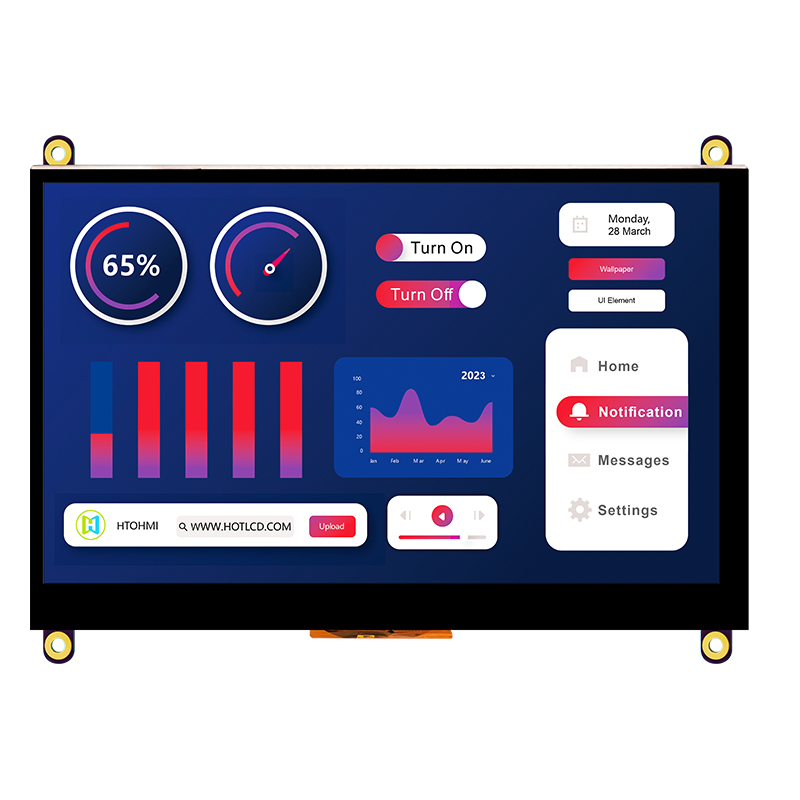
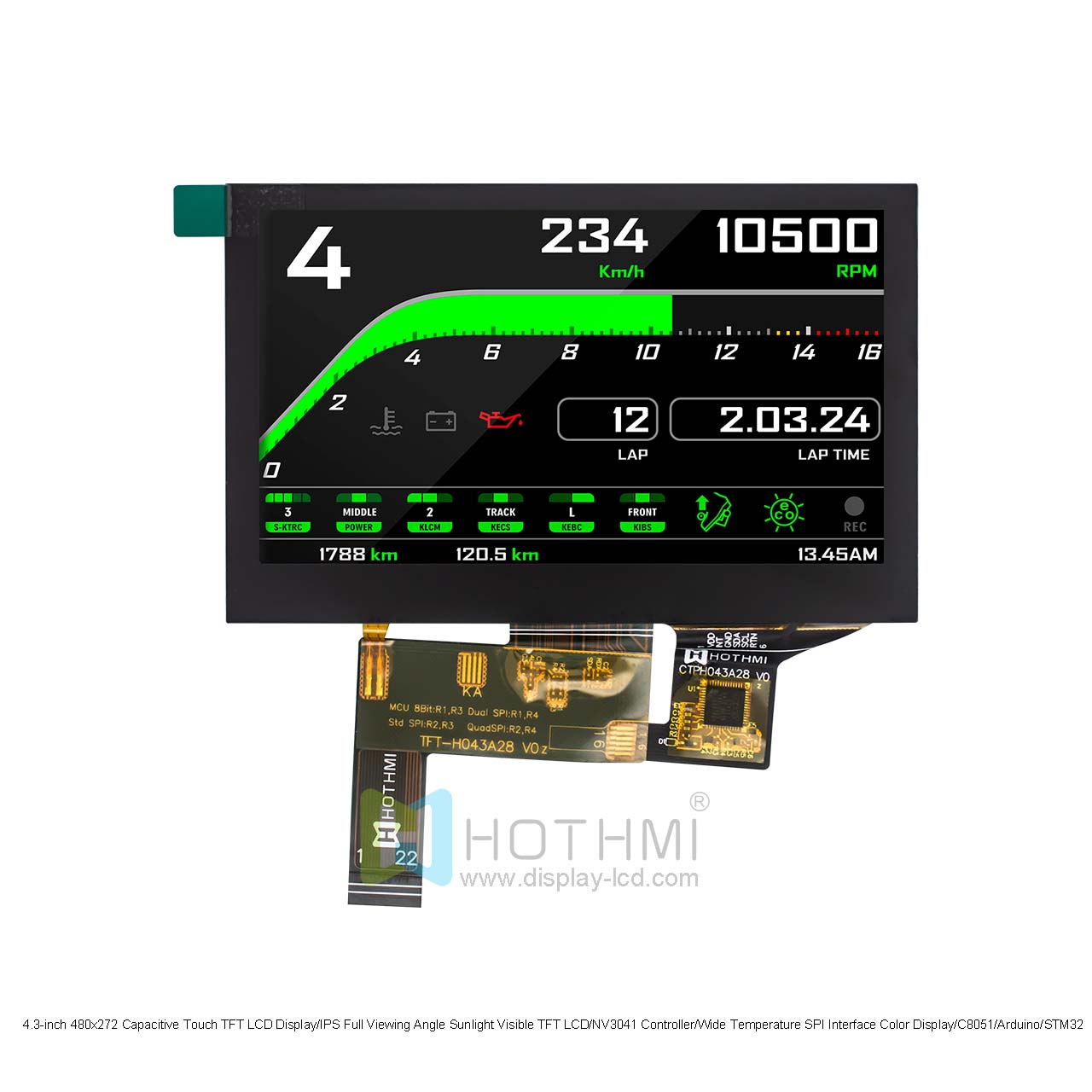
SPI and I²C are serial interfaces often considered for compact displays with relatively simple content. They can reduce the number of signal connections and may simplify PCB design.
Consider them when:
The display is small and the graphical workload is limited.
The product mainly shows text, icons, measurements or simple menus.
Pin availability is limited.
Check before choosing: Available bandwidth, update speed, supported resolution and the display controller's capabilities. A serial interface may become a bottleneck when the application requires frequent full-screen updates or smooth animation.
MCU interfaces, including 8080- or 6800-style parallel interfaces, are used in some small and medium embedded display designs.
They can be appropriate when the host processor and display controller support the required bus. However, parallel connections may require more pins and careful timing configuration.
Confirm the exact interface mode, bus width, control signals and initialization sequence in the datasheet. Explore Hotdisplay MCU LCD Display
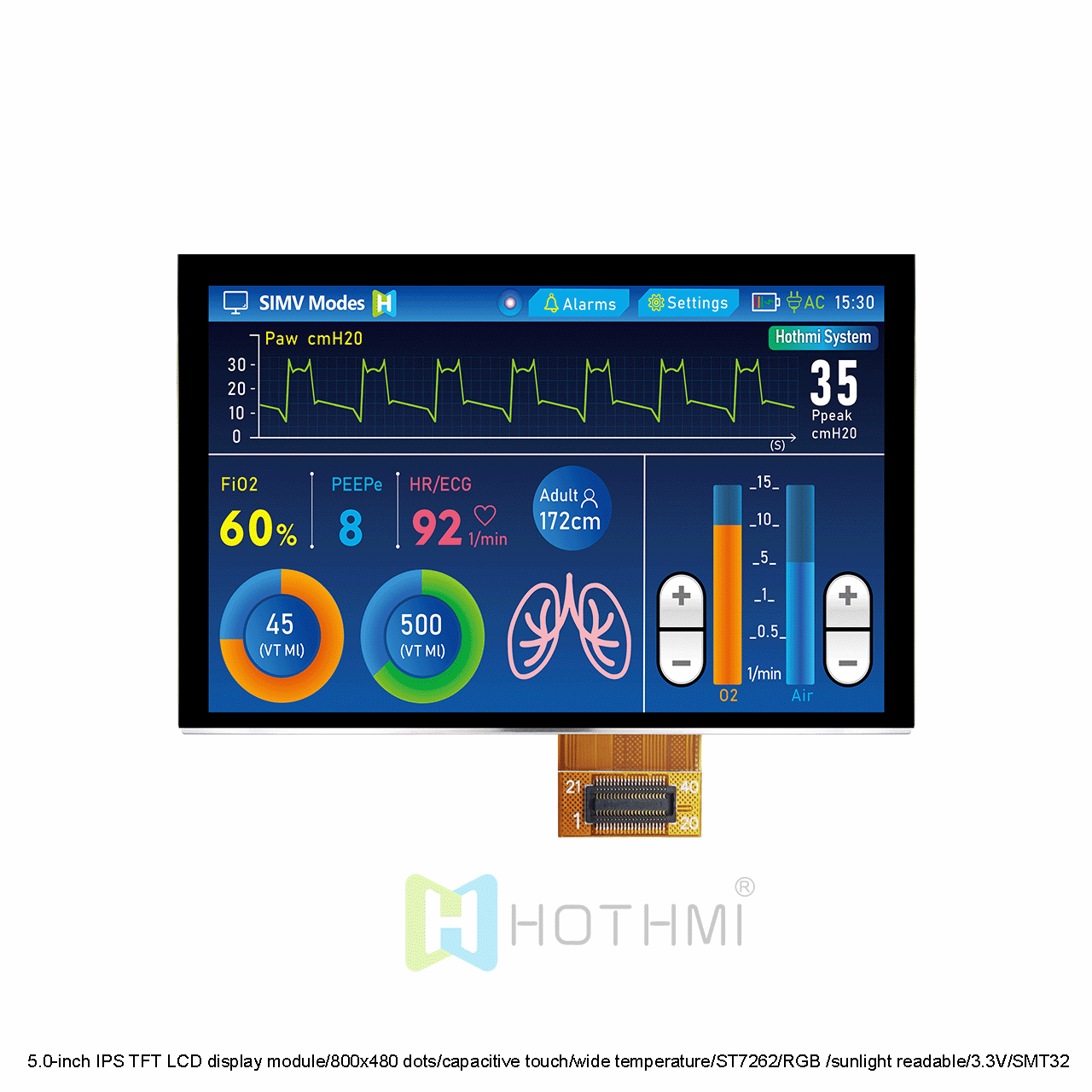
RGB interfaces transfer pixel data through parallel signals and are used in many display designs that require fast updates.
Potential applications include: Industrial HMIs, control panels and devices with graphical interfaces that need more bandwidth than a low-speed serial connection can provide.
Before selecting RGB, verify the host's RGB output, pixel clock, timing parameters, signal voltage, bus width and cable or PCB routing constraints. Learn more about RGB TFT LCD at Hotdisplay
LVDS uses differential signaling and is commonly considered for display systems where signal integrity and electromagnetic interference are important design considerations.
It may be suitable for industrial equipment and other systems using compatible display controllers or bridge chips.
Check lane configuration, timing, connector pinout and host compatibility. Do not assume an LVDS panel can connect directly to an RGB or MIPI DSI output. Find high quality LVDS TFT LCD
MIPI DSI is widely used in compact, high-resolution embedded display designs, including mobile-style platforms.
It can provide high data bandwidth with relatively few signal connections, but implementation depends on the processor, DSI host, lane configuration, driver IC and initialization requirements.
Before selecting a MIPI DSI screen, confirm that your processor supports the required DSI mode and that suitable software drivers and initialization information are available. Explore Hotdisplay MIPI TFT LCD Displays
eDP is used in display systems that require a compatible high-bandwidth interface, including many computing and larger-screen applications.
Choose it only after confirming that the host platform and display support compatible eDP specifications, connector arrangements and timing.
| Interface | Main consideration | Typical selection scenario |
|---|---|---|
| SPI / I²C | Lower pin count; bandwidth limits | Simple compact displays |
| MCU parallel | Host compatibility and bus width | Embedded control equipment |
| RGB | Pixel throughput and timing | Graphical interfaces and HMIs |
| LVDS | Differential signaling and system compatibility | Compatible industrial and larger displays |
| MIPI DSI | High bandwidth and DSI host support | Compact, high-resolution embedded products |
| eDP | Host and panel compatibility | Compatible computing and larger-screen systems |
These are general selection guidelines. Actual capability depends on the display model and host platform.
Before requesting a display quotation, prepare:
Processor or mainboard model.
Required display size and resolution.
Supported host interfaces and available pins.
Required refresh performance and graphical workload.
Power supply and signal-voltage requirements.
Operating temperature and mechanical constraints.
Available driver documentation and software support.
For a custom display project, also provide the connector type, FPC pinout and cable-routing requirements.
It depends on the host processor and software platform. SPI can simplify wiring for supported low-bandwidth applications, while RGB, LVDS and MIPI DSI require their respective host support and timing configurations.
Not always by changing the cable. The panel driver, controller, electrical signals and protocol must be compatible. A bridge board or a different display model may be required.
No. The correct interface depends on resolution, refresh requirements, color depth, timing and available bandwidth.
Explore TFT display interface Technology
HOTDISPLAY lists TFT LCD products with different resolutions, driver ICs and interfaces. Share your processor model, target resolution and interface requirements to help identify a suitable display. Request a TFT LCD quote now.