How to Choose the Right TFT LCD Display Module
1. Match Screen Size, Resolution and Active Area
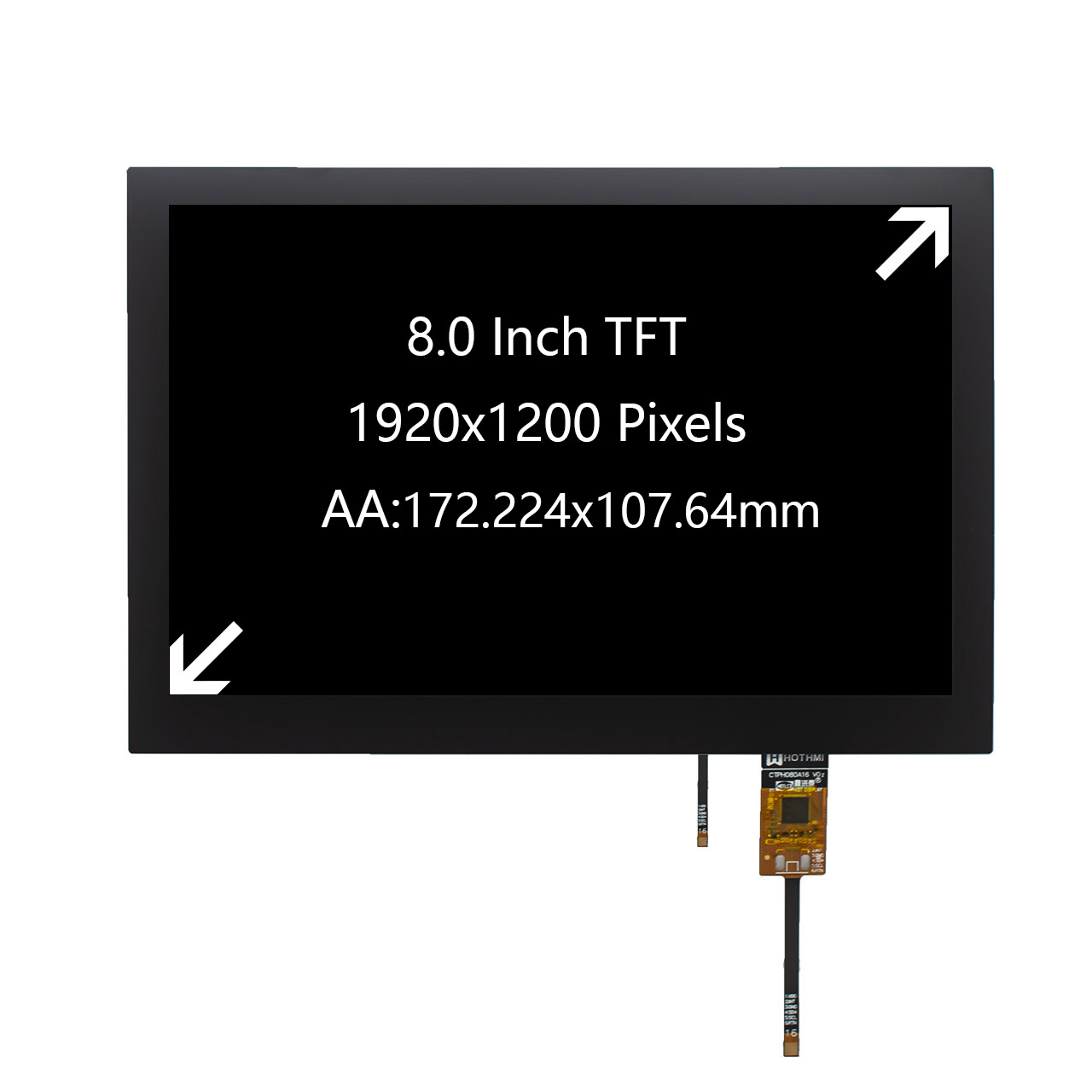
Start with the available installation space and the information that the display must show. Screen size defines the diagonal measurement, while resolution determines the number of pixels available for text, icons, graphics and images.
For example, HOTDISPLAY lists a 2.8-inch 240 × 320 SPI TFT LCD module and a 7-inch 800 × 480 MIPI TFT LCD module. These examples serve different design requirements and should not be treated as interchangeable.
Check the active area, overall dimensions, thickness, viewing orientation and mounting structure before choosing a model.
2. Confirm Interface and Host-System Compatibility
The display interface must be supported by the host processor, controller or mainboard. HOTDISPLAY lists MCU, RGB, LVDS, MIPI DSI, eDP, SPI/QSPI and HDMI interface options across its TFT display range.
SPI/QSPI: Consider for compact displays and systems where pin count and data-transfer requirements fit the application.
MCU parallel interface: Consider for compatible microcontroller-based products.
RGB: Consider for systems designed to drive a parallel RGB display.
MIPI DSI: Consider for compatible processors and embedded platforms.
LVDS/eDP/HDMI: Consider when the host architecture and selected display or controller board support the required interface.
Do not select a display based on the connector alone. Verify signal definitions, logic voltage, timing, driver IC, initialization sequence and software support.
3. Select Brightness and Optical Performance for the Environment
Indoor equipment, factory floors and outdoor products have different visibility requirements. Evaluate brightness, viewing angle, reflections, contrast, cover glass and ambient lighting together.
For strong-light environments, ask whether a high-brightness or transflective model is suitable and whether anti-glare, anti-reflection or optical bonding is needed. Higher brightness may also increase power consumption and heat, so the full system should be considered.
4. Check Operating Temperature and Power Requirements
For industrial, transportation or outdoor equipment, confirm the specified operating-temperature range of the exact model. Also check supply voltage, backlight drive requirements and total power consumption.
A display's temperature rating does not automatically guarantee that the complete device will operate reliably under the same conditions. The enclosure, backlight, host electronics and thermal design also matter.
5. Decide Whether Touch Is Required
Confirm whether the product needs no touch, resistive touch or capacitive touch. For capacitive touch, specify single-touch or multi-touch requirements where applicable. For gloved operation, explain the glove type and operating conditions so the touch solution can be evaluated appropriately.
If touch may be added in a future product revision, discuss mechanical and electrical compatibility before finalizing the PCB and enclosure.
6. Verify Mechanical and Connector Details
Before approving a sample, compare the module's overall dimensions, active area, thickness, FPC position and length, connector type, pin assignment and mounting requirements with your product drawings.
HOTDISPLAY lists customization options for FPCs, connectors, PCB layout, communication interfaces and touch covers. Confirm feasibility for the selected model and project before tooling or production.
Frequently Asked Questions about TFT LCD Display Modules
What is the difference between a TFT LCD panel and a TFT LCD module?
A TFT LCD panel refers primarily to the display panel itself. A TFT LCD module is an assembly that may include the LCD panel, driver IC, backlight, FPC and other supporting components. The exact configuration depends on the model, so review the product datasheet before designing the host interface.
Which TFT LCD interface should I choose?
Choose an interface supported by your host processor or controller. SPI/QSPI, MCU, RGB, MIPI DSI, LVDS, eDP and HDMI serve different system architectures. Confirm the interface specification, pinout, timing, voltage levels and driver support before ordering.
Can HOTDISPLAY supply a TFT LCD display with touch?
HOTDISPLAY lists both capacitive and resistive touch options, including touch-cover customization. Availability depends on the selected display and design requirements. Specify the required touch technology, cover dimensions, touch mode and operating conditions when requesting a quotation.
How do I choose a TFT LCD display for outdoor use?
Evaluate ambient light, brightness, reflections, viewing angle, temperature and power consumption together. High-brightness displays, transflective options and suitable surface treatments may be worth considering. Confirm the performance of the specific model under your actual operating conditions.
Can the TFT LCD module be customized to fit my PCB or enclosure?
HOTDISPLAY lists options including FPC and connector customization, PCB modifications, communication-interface options and touch-cover customization. Provide mechanical drawings, connector details and interface requirements so feasibility can be checked for your target model.
What information is needed to request a quotation?
Please provide the target display size, resolution, interface, touch requirement, brightness, operating-temperature range, mechanical constraints, estimated order quantity and target application. If you need a replacement, also provide the existing model number, datasheet or clear photos of the module and connector.
Can HOTDISPLAY help with display integration?
HOTDISPLAY's website lists integration-related options and software resources. Support requirements depend on the selected module and host platform. Share your processor or development board, operating system, interface and current integration issue so the available documentation and support can be confirmed.
Request a TFT LCD Display Module Solution
Looking for a standard TFT LCD module or a customized display for your next product?
Send HOTDISPLAY your target specifications, application requirements and estimated quantity. We can review the relevant product options and discuss interface, touch, optical and mechanical requirements for your project.
Contact HOTDISPLAY to discuss your TFT LCD display module requirements.